
Last updated November 25, 2026
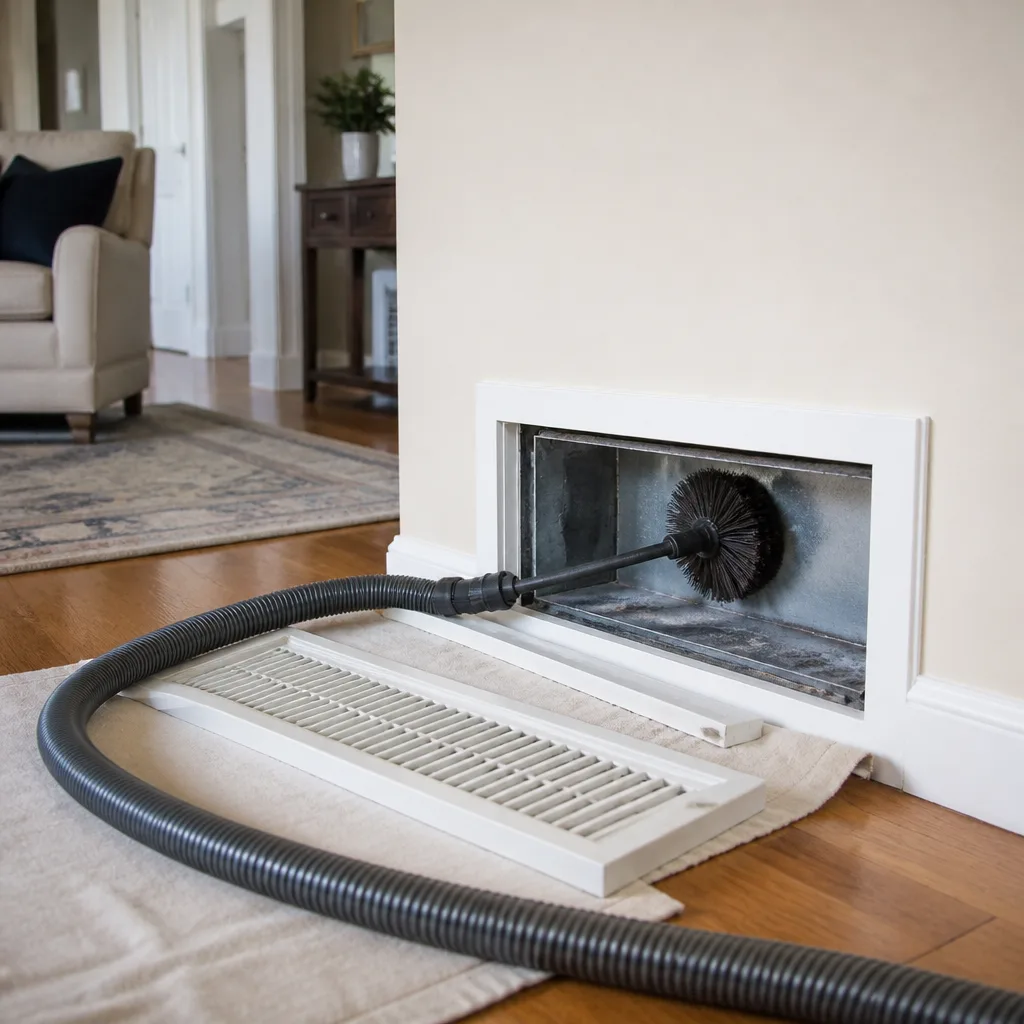 Whole-home duct cleaning
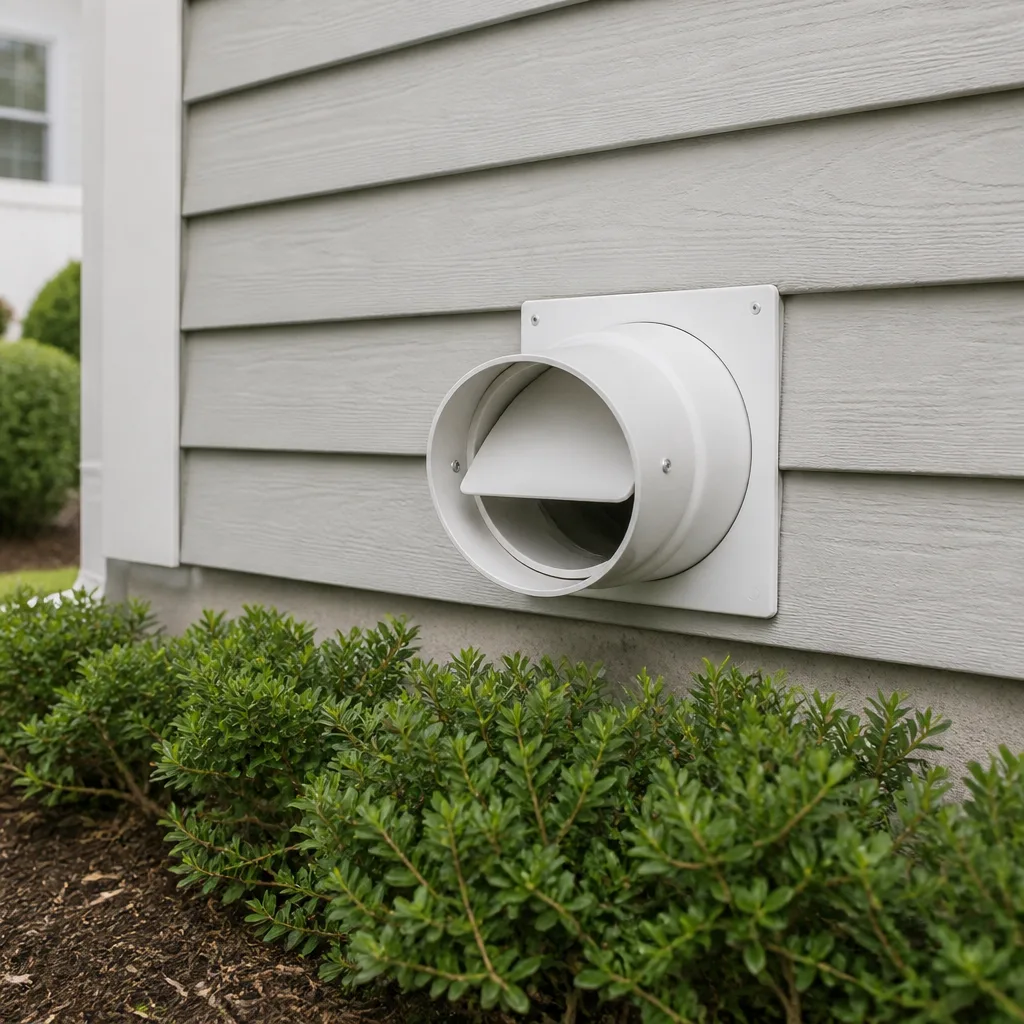 Dryer vent cleaning
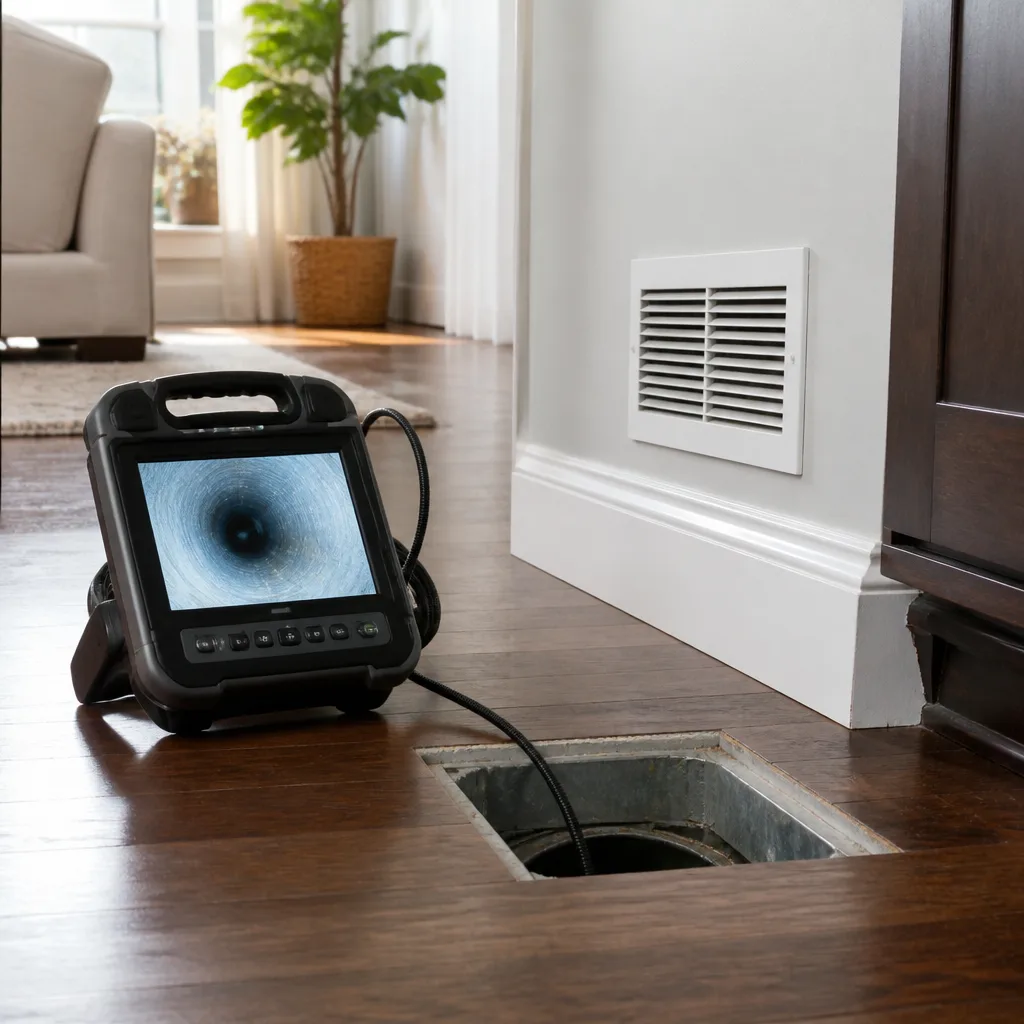 Camera inspection
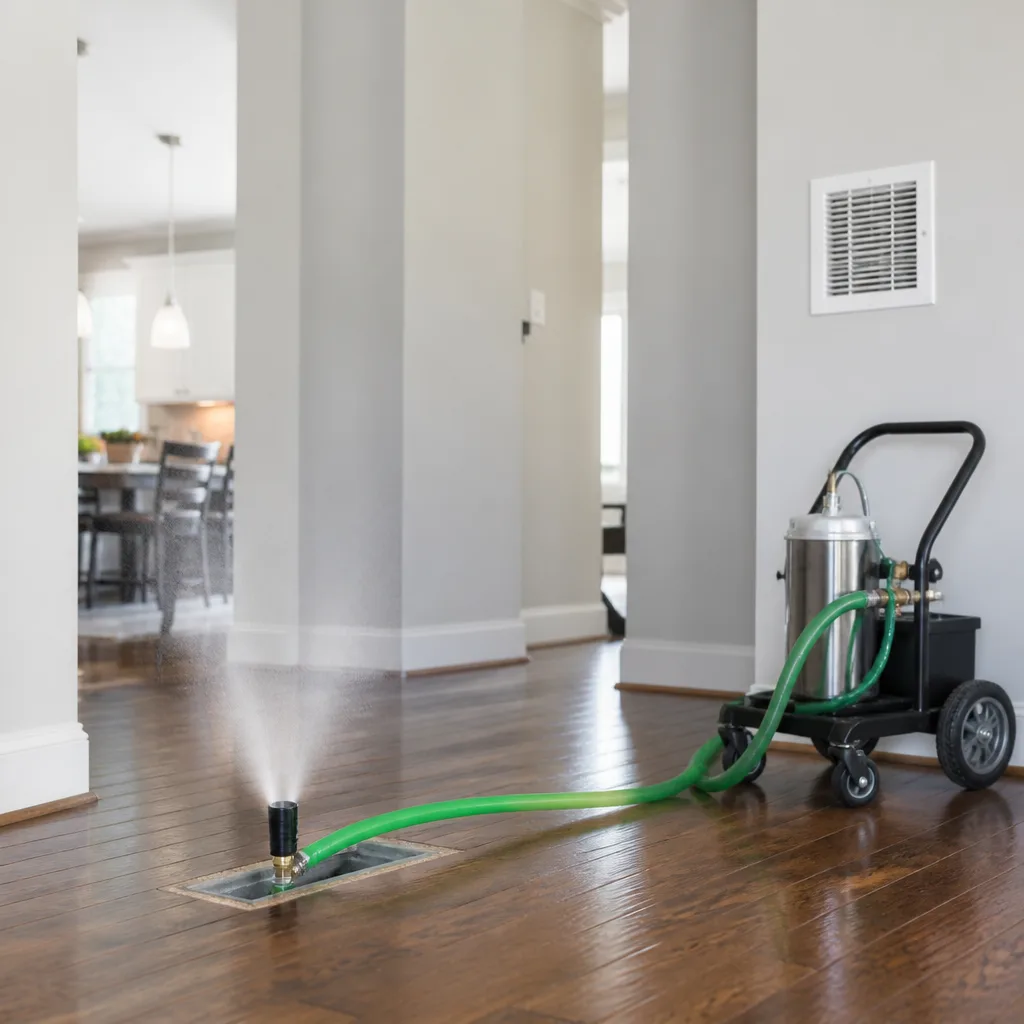 Sanitizing & deodorizing
Whole-system duct and dryer vent check with before-and-after photos - you see exactly what came out of your vents
That "$99 whole-house special" is a bait ad - the real number appears once they are in your hallway, or the "clean" is a shop-vac at the register. We photograph the inside of your ducts before and after instead.
Air Duct Cleaning Warning Signs: A Redmond Homeowner’s Reference Guide
Uneven room temperatures get blamed on the thermostat, then on the furnace, then on whatever the last technician suggested replacing. In plenty of Redmond homes, the actual cause sits in the duct system itself: a partially collapsed flex run behind a finished wall, a leaking connection in the attic, or a branch choked with debris that no thermostat adjustment will ever fix. Duct problems rarely announce themselves loudly. They show up instead as small behavioral clues – filters that darken too fast, a faint smell at startup, one bedroom that never quite catches up. This guide teaches you to read those clues the way a technician does, so you can tell the difference between a routine cleaning and a job that needs more.
Quick Answer
The main warning signs of a duct system that needs professional attention are a filter that loads up far faster than it should, musty or stale odors when the blower starts, visible staining around supply registers, whistling or popping sounds during operation, and allergy symptoms that track with your HVAC running cycles. One clue on its own is usually minor. Two or three together, especially in a damp Pacific Northwest climate like Redmond’s, usually point to a leak, a restriction, or contamination loading that a homeowner can’t safely resolve alone.
Styles & brands we work with
- Whole-home duct cleaning
- Dryer vent cleaning
- Camera inspection
- Sanitizing & deodorizing
Table of Contents
- The Filter Loading Rate Test
- Musty vs. Dusty: What Startup Odors Tell You
- Tracking Allergy Symptoms Against HVAC Cycles
- Reading Register Staining Patterns
- Acoustic Clues: What Your Ducts Sound Like
- Why One Weak Room Points to a Branch Problem
- When Cleaning Is Enough and When It Isn’t
- Common Mistakes to Avoid
The Filter Loading Rate Test: Your Cheapest Diagnostic
A clean filter that turns grey or brown within a few weeks is telling you something specific: the system is pulling more particulate matter than it should, faster than it should. In a healthy duct system, a standard filter typically lasts a reasonable service interval with gradual, even discoloration. If yours is loading up in half that time, you’re looking at one of three causes – a filtration problem, contamination loading inside the ducts, or a return-side leak pulling dirty air from unconditioned space.
Here’s how to run the observation at home:
- Install a fresh filter and note the date on the media frame with a marker.
- Check it every two weeks in daylight, not under a flashlight – you want the same conditions each time so the comparison is honest.
- Photograph the filter at each check. Phone photos make gradual darkening obvious in a way your eye alone won’t catch.
- Note whether the discoloration is even across the face or concentrated on one edge. Edge-heavy loading usually means a nearby return leak or a duct branch pulling from a dirty source.
- Compare the loading rate to the last filter. If the interval keeps shrinking, the problem is getting worse, not stabilizing.
A single fast-loading filter isn’t proof of anything. A pattern of accelerating loads is. Redmond’s wet winters and long shoulder seasons keep windows closed for much of the year, which means the HVAC system carries more of the filtration burden than it does in drier climates – one reason filter intervals here can look different from what a label suggests. The filter loading rate is the reason we run a full duct inspection on every job rather than a surface vacuum, using equipment from air duct cleaning to get a verifiable before-and-after you can compare yourself.
Musty vs. Dusty: What Startup Odors Actually Tell You
Almost every older home has some faint odor when the furnace kicks on for the first time each season. That’s normal dust burning off the heat exchanger. What matters is the character of the smell and when it appears – and the distinction determines the type of service your system actually needs.
Dusty, dry, “warm-electronics” smell at the start of heating season: typically benign. It usually clears in a cycle or two and doesn’t return mid-season. A routine cleaning may reduce it, but it’s not an urgent signal.
Musty, damp, or basement-like smell during cooling cycles or humid weather: this points to biological growth somewhere in the system – often the evaporator coil, the condensate pan, or insulated flex duct where moisture has collected. In Redmond’s climate, where outdoor humidity stays high through spring and fall, a cooling system that’s undersized or oversized can leave the coil damp and ready for growth. This is the class of problem where a routine vacuum isn’t sufficient; you need surface cleaning and sanitizing, and sometimes coil work as part of HVAC cleaning.
Sharp, chemical, or “hot” smell: stop using the system and call a technician to inspect. This is not a duct-cleaning job and can indicate a heat exchanger or electrical issue.
The musty-versus-dusty distinction is the single most useful odor test a homeowner can learn. It sorts the minor smells from the ones that point to a moisture source that will keep generating the problem until it’s addressed.
Tracking Allergy Symptoms Against HVAC Cycles
If you suspect your duct system is contributing to allergy symptoms but you can’t prove it, a simple observation log will give you real data within two weeks. The goal isn’t medical diagnosis – it’s correlation. You’re looking for whether symptoms track with system operation.
Set up a log with four columns: date, time, HVAC status (running or off), and symptom severity (choose a fixed 1-5 scale and stick to it). Take five minutes to record twice a day. After ten to fourteen days, review the log and ask one question: are worse-symptom entries concentrated in hours when the blower ran?
What different correlations mean:
- Symptoms worsen within 15-30 minutes of the blower starting: strongly suggests particulate disturbance from inside the ducts or the blower cabinet. Contamination is being mobilized.
- Symptoms worsen hours into a run cycle but not at startup: may indicate a filtration shortfall rather than duct contamination specifically.
- Symptoms show no relationship to HVAC cycles: the cause is likely outside the duct system – outdoor pollen, indoor mold elsewhere, or pets. A duct cleaning still helps overall air quality, but it won’t be the fix.
- Symptoms are year-round but worse in winter: common in Redmond, where closed-house season concentrates indoor contaminants. A full-system clean, plus an added filtration upgrade from a brand like Aprilaire, is often what shifts the curve.
This observation log is exactly the kind of evidence our technicians look for before recommending scope. It tells the difference between “the ducts need cleaning” and “the ducts need cleaning plus a leak sealed.”
Reading Register Staining Patterns
Supply registers collect dust. That’s not news. What matters is the pattern – shape, location, and color of the staining – because different patterns point to different problems.
- Even light grey film across the whole register face: normal ambient dust settling. Not a warning sign on its own.
- Heavy dark striping radiating from the louver slots: indicates high particulate load in the supply air stream, often from upstream contamination or a poorly sealed duct connection.
- Brown or black ring around the register frame only: usually air leaking around an improperly sealed boot – conditioned air escaping and pulling dirty attic or wall-cavity air in behind it. Sealant issue before it’s a cleaning issue.
- Streaking on walls below or beside the register: a strong signal of air blowing past a poorly sealed diffuser, carrying dust onto the wall surface. This is the kind of clue that should lead to duct sealing, not just cleaning.
- Greenish or distinctly dark patch at one register only: moisture. That specific branch may be insulated poorly or running through a damp space. Investigate the branch before cleaning the whole system.
A home in Redmond’s older neighborhoods – overhanging trees, mature landscaping, homes with crawlspace-adjacent branches – often shows all of these patterns at once. The reason our Redmond Air Duct Cleaning Co service menu includes duct repair and sealing alongside cleaning is that surface debris tells only half the story. Staining patterns often tell the other half.
Acoustic Clues: What Your Ducts Sound Like
Duct systems are audible when something is wrong, but most homeowners tune the sound out because it’s been there so long. If you walked into your attic during a blower cycle, you’d be surprised how much sound information is available.
Put your phone on a table in the room closest to the air handler and record 60 seconds with the system running, then listen back with headphones. Sounds to listen for:
- Whistling or high-pitched hiss at a register: restricted airflow. That branch is choked – debris, a collapsed section, or an improperly sized run.
- Popping, ticking, or snapping during heat cycles: metal duct expansion is normal, but regular loud popping after years of quiet usually means a connection has loosened or a fitting is being stressed.
- Rushing air behind a wall with no visible register: air is escaping a leak – usually a failed connection – and moving through wall cavity space. This is one of the clearest signs your system is losing conditioned air before it reaches you.
- Deep thrumming or rumble from the return: undersized return duct or obstruction. In either case, your blower is working harder than it should and the filter is loading faster than it should.
- Faint fluttering or “flapping” in the attic or crawlspace during operation: a partially detached or collapsed section of flex duct. Flex is common in newer build construction across the east side of Redmond, and it fails at bends and near fittings more than anywhere else.
None of these sounds requires emergency intervention, but all of them are worth mentioning when you call for an inspection. Our technicians listen to the system at every register during the walk-through because the sound pattern often confirms what the visual inspection is telling us – particularly when using fixed-flow equipment and cameras to see inside runs directly.
Why One Weak Room Points to a Branch Problem
The bedroom over the garage is always cold. The kitchen warms faster than the rest of the house. The bathroom never quite does what the thermostat says. These aren’t thermostat problems; they’re branch problems – a specific run of duct serving that room has too much restriction, too much leakage, or too little flow.
Walk through this diagnostic sequence for any weak room:
- Measure the actual temperature differential. Tape a thermometer to a stand at the room’s center, close the door as you normally would, and read it after 30 minutes with the system running. More than a mild difference from the target temperature is worth investigating.
- Feel the airflow at the register. A hand placed lightly against the register face should feel steady air. Weak or intermittent flow points to a supply-side issue.
- Compare to the nearby register. If the room next door has strong flow and this one doesn’t, the problem is in this branch, not the main trunk.
- Look at the register face. Partial-staining or a shadow pattern that suggests air is escaping around the boot rather than through it.
- Listen. A whistling or hissing sound at this register but not others is diagnostic – that specific branch is restricted.
If you get through all five checks and confirm a real differential, you’re looking at either debris restriction, a leak at a connection, or a collapsed flex section. Debris cleans out. Leaks and collapses need repair and sealing, which is why our dryer vent cleaning and related services are only part of the story – duct repair closes the loop that cleaning leaves open. Around Redmond’s tree-lined edges and on older crawlspace-vented foundations, we see more disconnected flex and unsealed boots than owners expect.
When Cleaning Is Enough and When It Isn’t
Not every warning sign means you need the same service. This is the honest picture of what each service category covers, so you can match the symptom to the fix.
- Air duct cleaning: appropriate when signs point to accumulated debris without a moisture source, a leak, or growth. Removes the load and restores airflow to clean baseline.
- HVAC cleaning: add when the odor test says musty or the coil is suspect. Includes blower, coil, and drain pan cleaning alongside the ducts.
- Duct repair and sealing: add when staining, acoustic clues, or branch differentials point to leaks or collapsed sections. Sealing the leak is the difference between a cleaning that lasts and one you’ll repeat next year.
- Air quality and sanitizing: add when musty growth is present or when medical sensitivity is a concern. We use surface and sanitizing solutions applied to system components, and equipment tied to brands like Abatement Technologies and Guardsman to handle the contamination-level work safely.
- Dryer vent cleaning: a separate safety service. Dryer vents are one of the leading causes of residential fires. Every dryer vent should be cleaned on a regular schedule regardless of duct condition.
In our experience, most Redmond homes that show two or three warning signs at once need a combination – not because the service exists, but because the symptoms point to it. We tell homeowners exactly which combination their system actually needs, in writing, before anyone starts working.
Common Mistakes to Avoid
- Blaming the thermostat first. In a system with a weak room, the thermostat is almost never the cause. Adjusting setpoints to compensate for a restriction just makes the rest of the house too warm or too cold.
- Replacing the filter and calling it fixed. A new filter buys weeks, not a solution. If it darkens fast, the underlying contamination or leak is still there.
- Chasing cheap quotes and coupons. Low advertised prices frequently translate to a surface vacuum run that touches only the visible main trunk – with a much larger invoice once the technician is inside the house. Ask for whole-system pricing before anyone arrives.
- Skipping the attic and crawlspace inspection. Many Redmond homes have flex duct runs through unconditioned attic and crawlspace space where leaks and disconnects hide. A cleaning that doesn’t look inside those runs may miss the actual cause.
- Ignoring moisture source after a musty smell. Cleaning a system with ongoing moisture exposure means the growth will return. Address the leak or insulation issue first, then clean and sanitize.
- Delaying dryer vent cleaning. Dryer vent lint is a fire hazard, not a maintenance afterthought. It belongs on the same schedule as the air ducts.
- Assuming a duct clean equals duct sealed. Cleaning removes debris; only repair and sealing restore air balance and stop ongoing infiltration.
See the difference
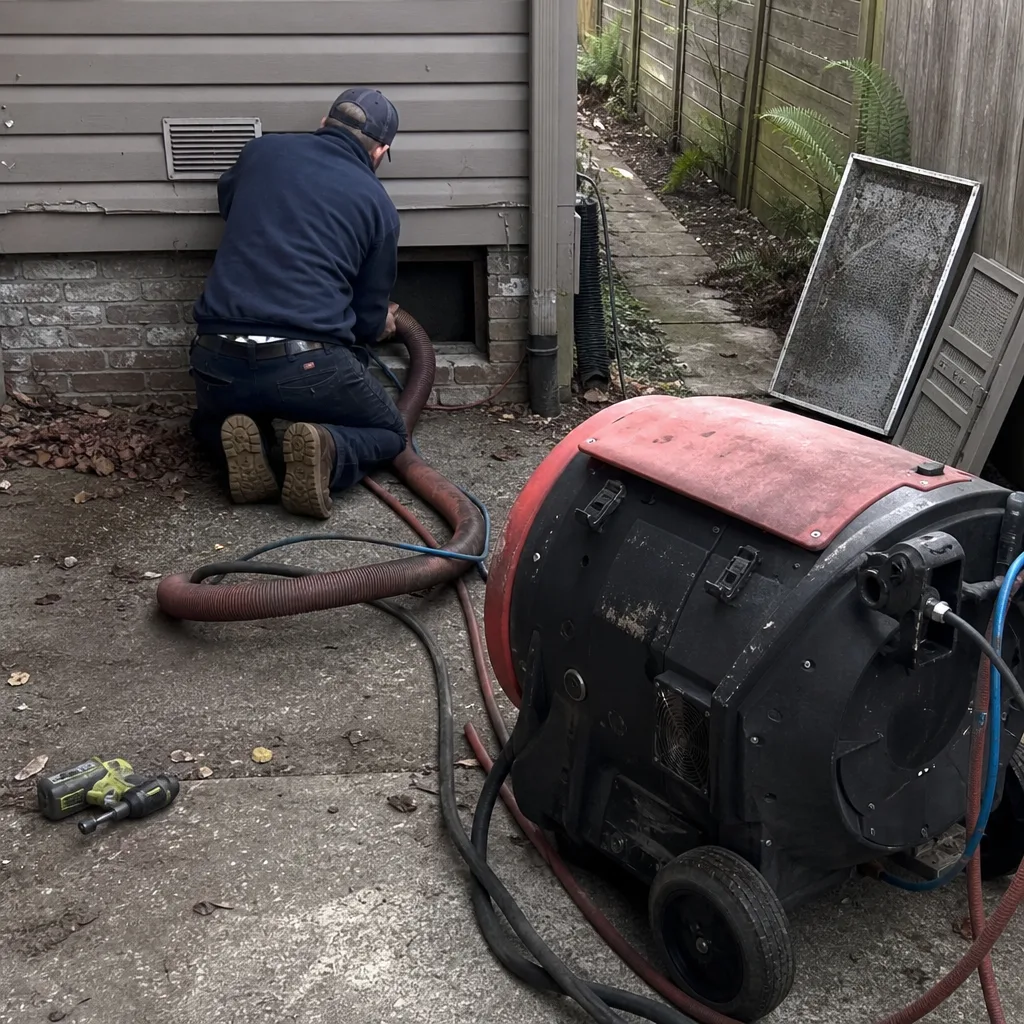 Before
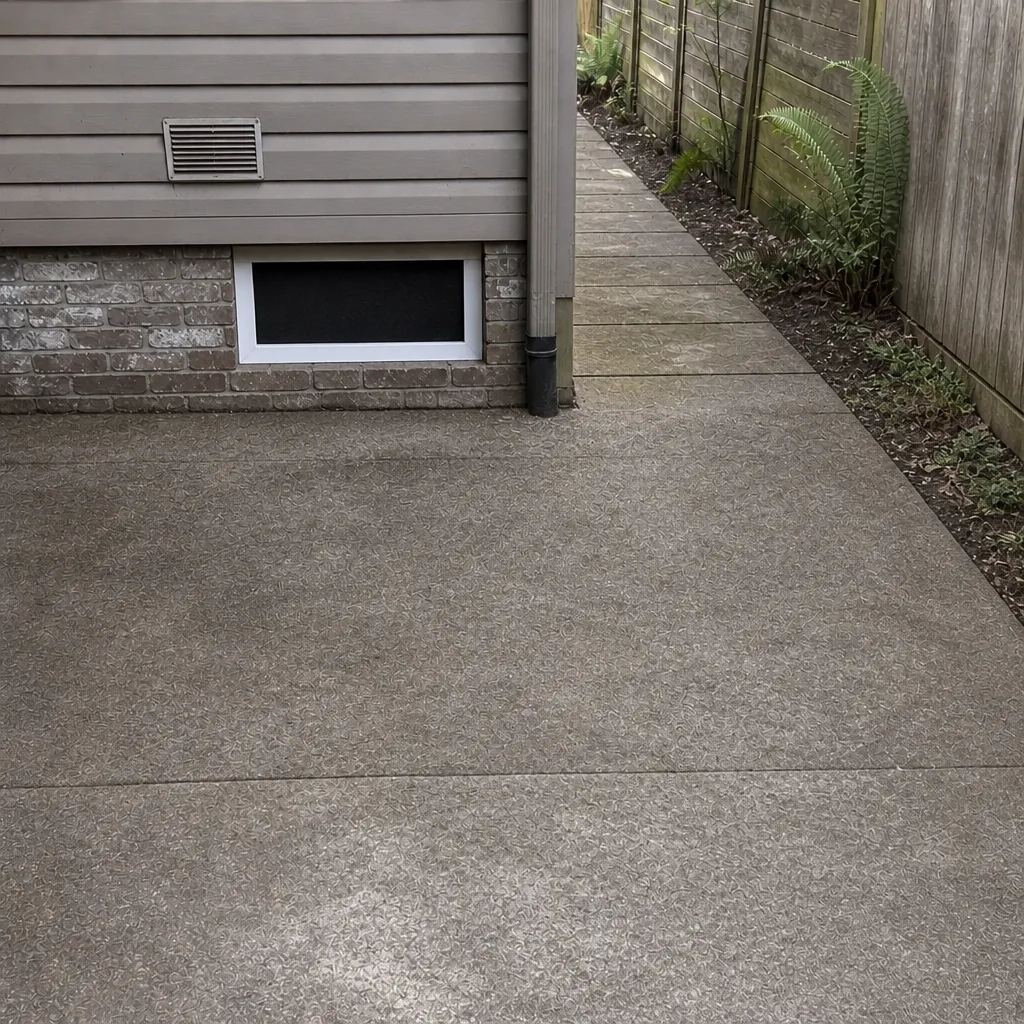 After
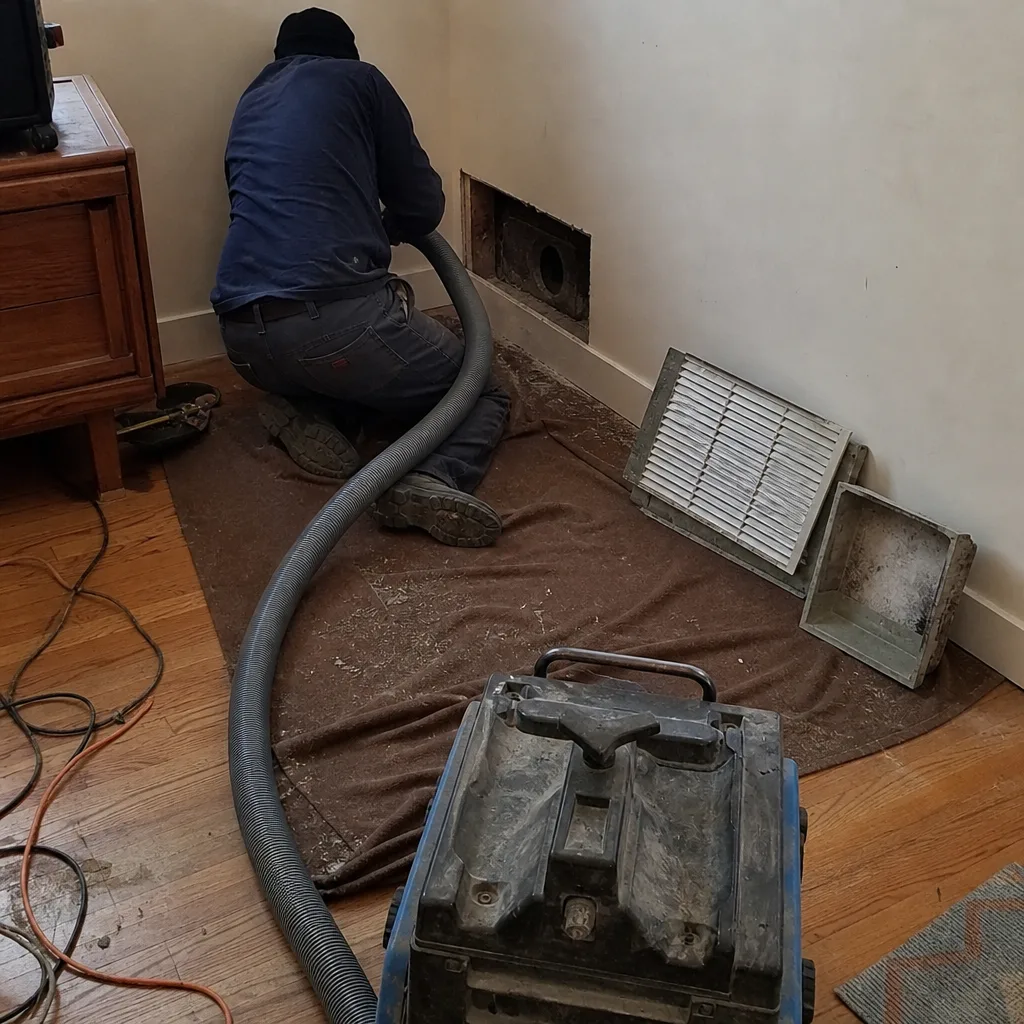 Before
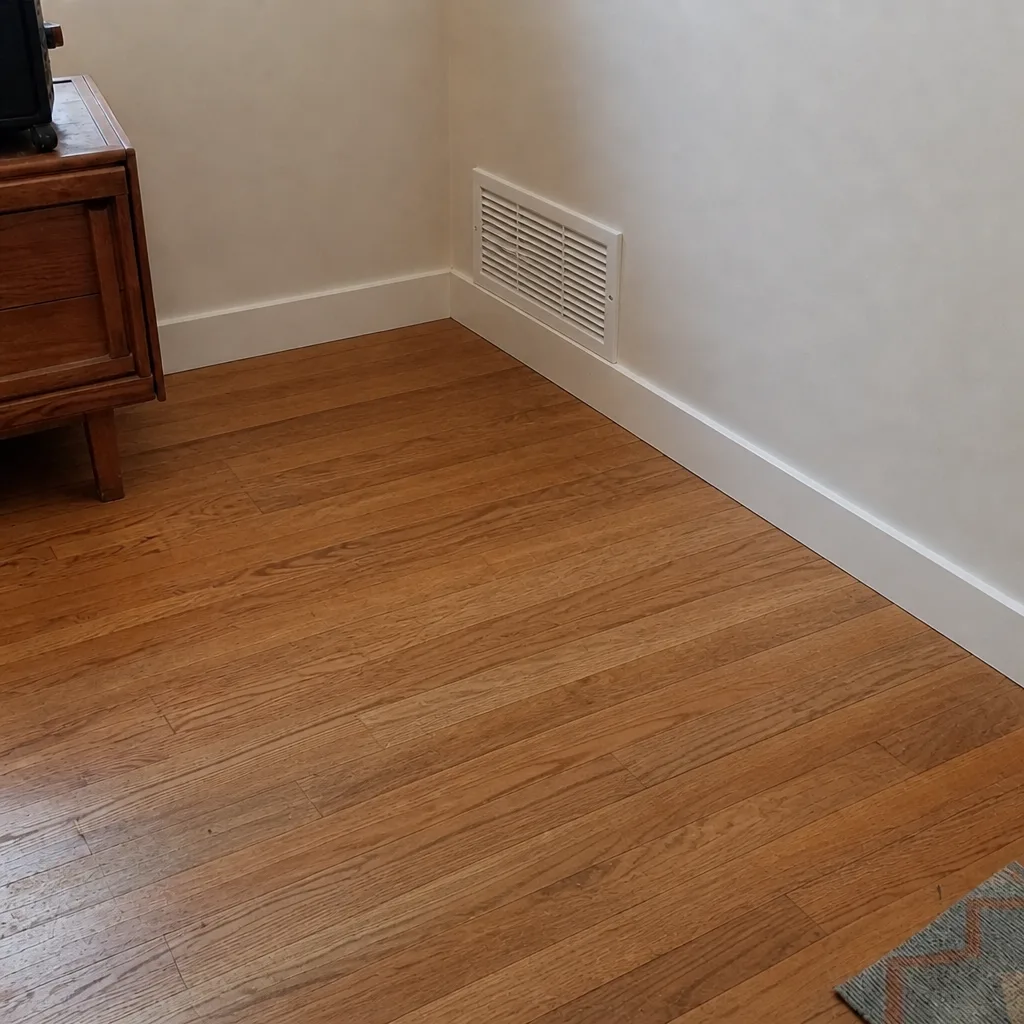 After
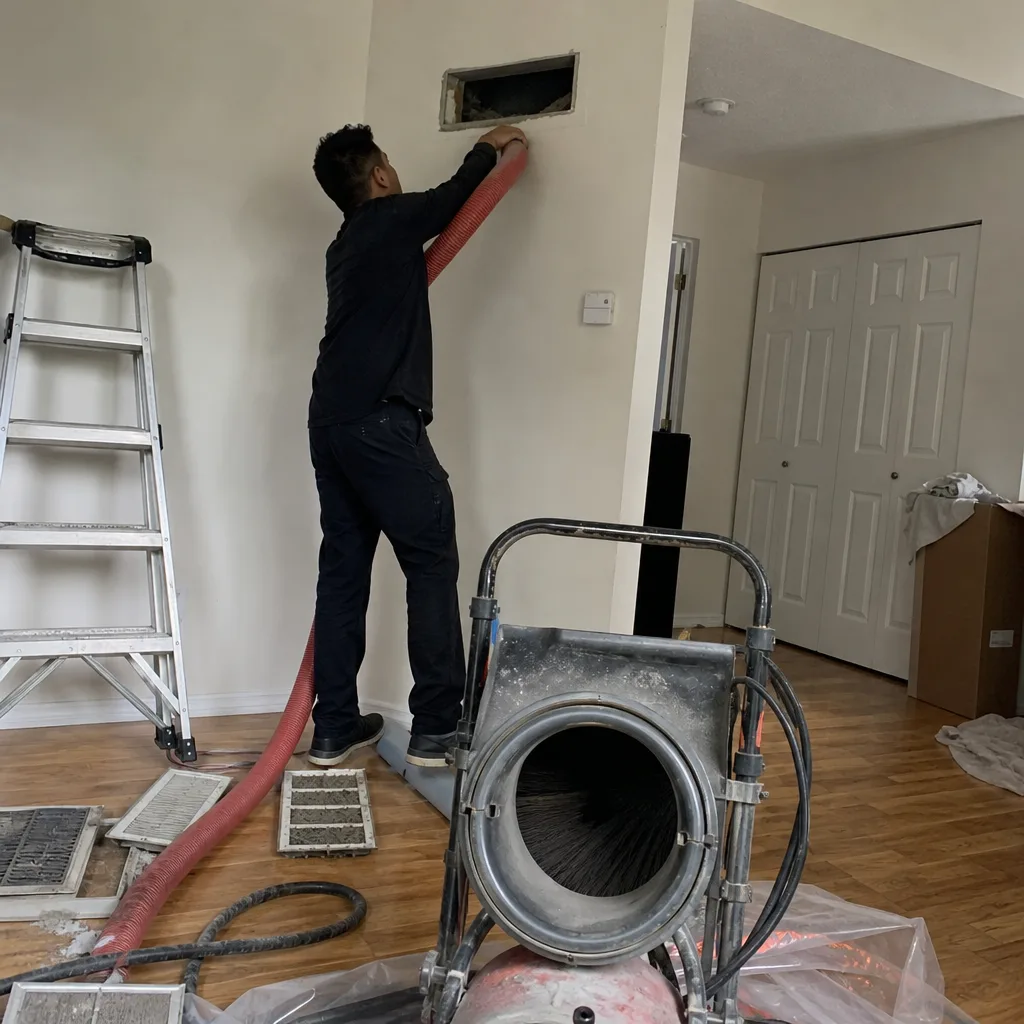 Before
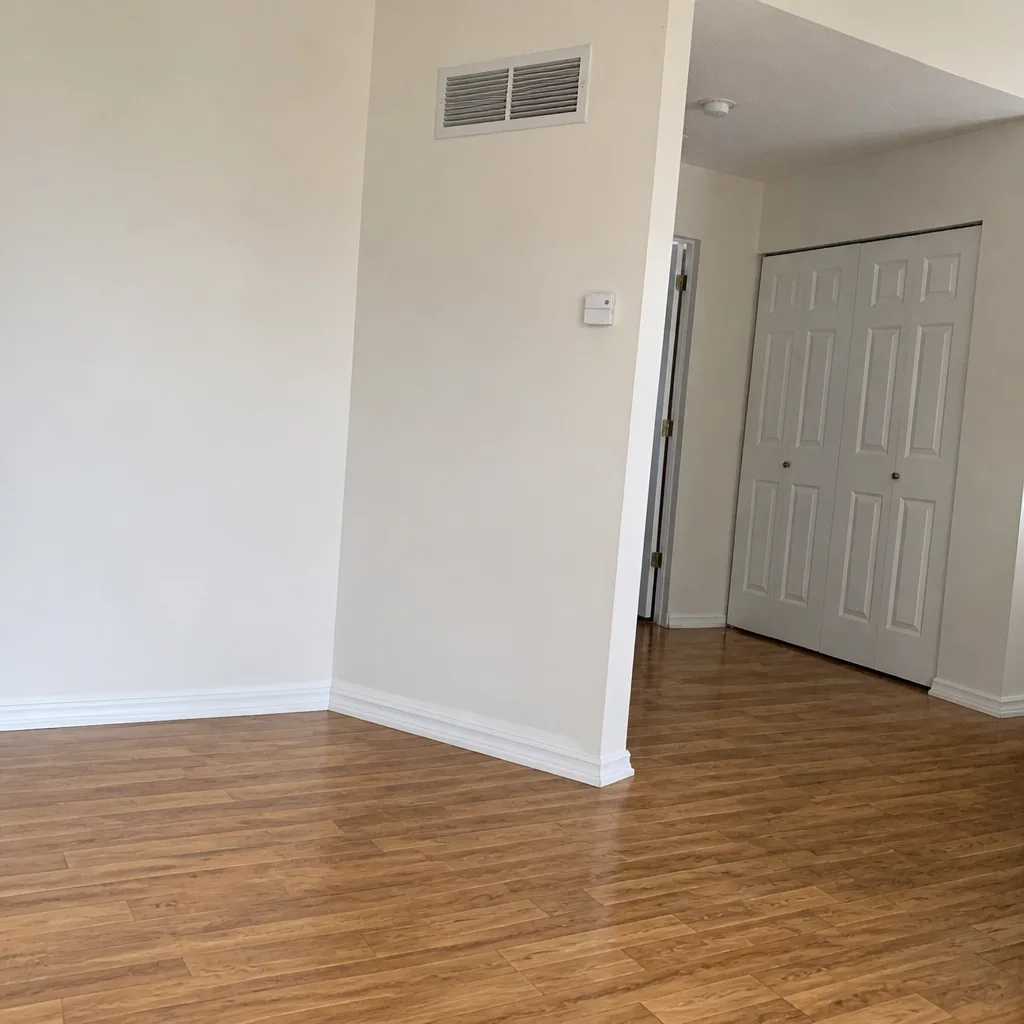 After
When to Call a Professional
You should call for a professional inspection when you can check off any of the following: the filter loading rate is accelerating, a musty smell appears at startup and doesn’t clear, a staining pattern is concentrated at specific registers, a weak room persists after two weeks of warmer-weather testing, or acoustic clues point to leaks or collapsed duct. These signs together mean a home-level assessment is worth the call. DIY air duct cleaning almost always misses the deep runs and connections where the actual problem lives. Redmond Air Duct Cleaning Co offers free estimates in Redmond – call (877) 792-7059. We answer 24/7. Fast dispatch from 7am to 7pm, Sunday through Friday. Our technicians have up to 11 years of experience, use professional-grade equipment from Rotobrush and Nikro, and see before-and-after outcomes that you can visually verify on your system components.
Frequently Asked Questions
Whole-system air duct cleaning in the Redmond area typically falls in a mid-range bracket that depends on the number of registers, the number of systems in the home, and whether repair or sealing is needed on top of cleaning. We quote per system, not per vent, and we put the number in writing before any work starts. Call (877) 792-7059 for an exact quote – estimates are free.
Low coupon quotes are usually priced for a surface vacuum of the main trunk, not the whole system. Once a technician is on-site, the scope grows and the invoice grows with it. We price the entire system up front, name every component being cleaned, and show before-and-after photos of your own ducts. No surprise add-ons. Call (877) 792-7059 for a whole-system estimate.
Before-and-after photos of your duct interior, taken with a camera at the same point in each run, are the standard. Ask your contractor to provide them proactively. Our technicians photograph every cleaned run and review the findings with you. Call (877) 792-7059 to book an assessment.
Most homes here benefit from a full duct cleaning every few years, but the schedule should be driven by filter loading rate, odor signals, and any renovation or moisture event – not by a fixed calendar. Dryer vent cleaning deserves its own regular interval because of fire risk. Call (877) 792-7059 for an honest read on your system’s actual needs.
A dusty smell at startup is normal heat burn-off. A musty smell points to moisture and biological growth in the system, generally requiring a moisture source fix plus cleaning and sanitizing rather than a routine vacuum. Call (877) 792-7059 to schedule a full-system inspection.
Yes, and it’s more common than most owners expect. A leaking boot, a partially collapsed flex run, or a disconnected fitting behind a finished wall can starve a specific room of airflow even when the HVAC unit is working correctly. Sealing the leak restores balance; cleaning alone won’t. Call (877) 792-7059 for a free estimate that includes leak detection.
The Bottom Line
Duct problems rarely announce themselves loudly. They show up in the small, repeatable patterns a homeowner can learn to watch: accelerating filter loads, musty startup odors, symptom logs that track HVAC cycles, register staining that tells you whether it’s debris or a leak, and sounds that point to a collapsed branch or a loose fitting. Read those signs early and you’re choosing between a routine cleaning and a much larger remediation job. Read them after symptoms compound and the fix is bigger. If two or three signs line up in your Redmond home, it’s worth the call. Redmond Air Duct Cleaning Co uses professional-grade equipment from Rotobrush, Nikro, and Abatement Technologies, offers the range of duct repair, sealing, HVAC cleaning, and sanitizing in one place, and shows the outcome in before-and-after photos of your own system. Call (877) 792-7059 for a free estimate. We answer 24/7. Fast dispatch from 7am to 7pm, Sunday through Friday.
Written by the team at Redmond Air Duct Cleaning Co.