
Last updated November 25, 2026
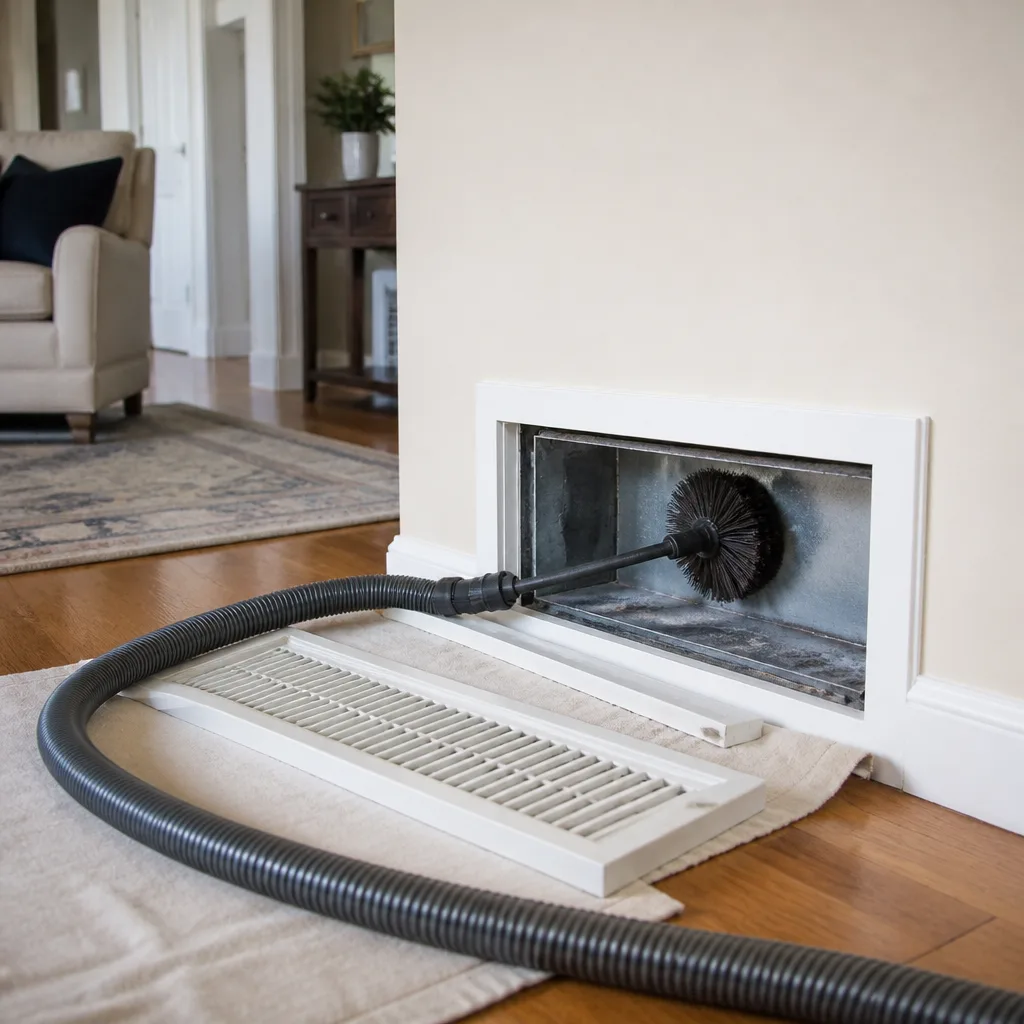 Whole-home duct cleaning
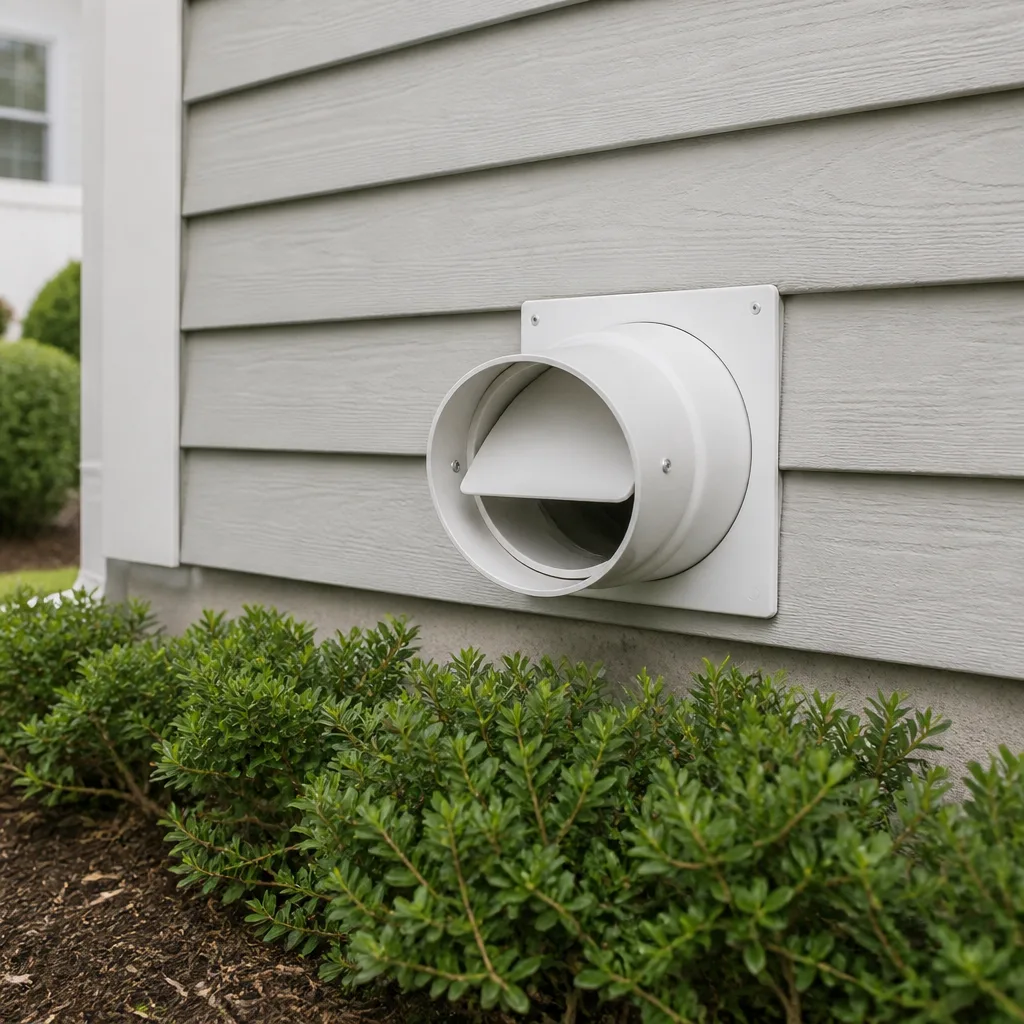 Dryer vent cleaning
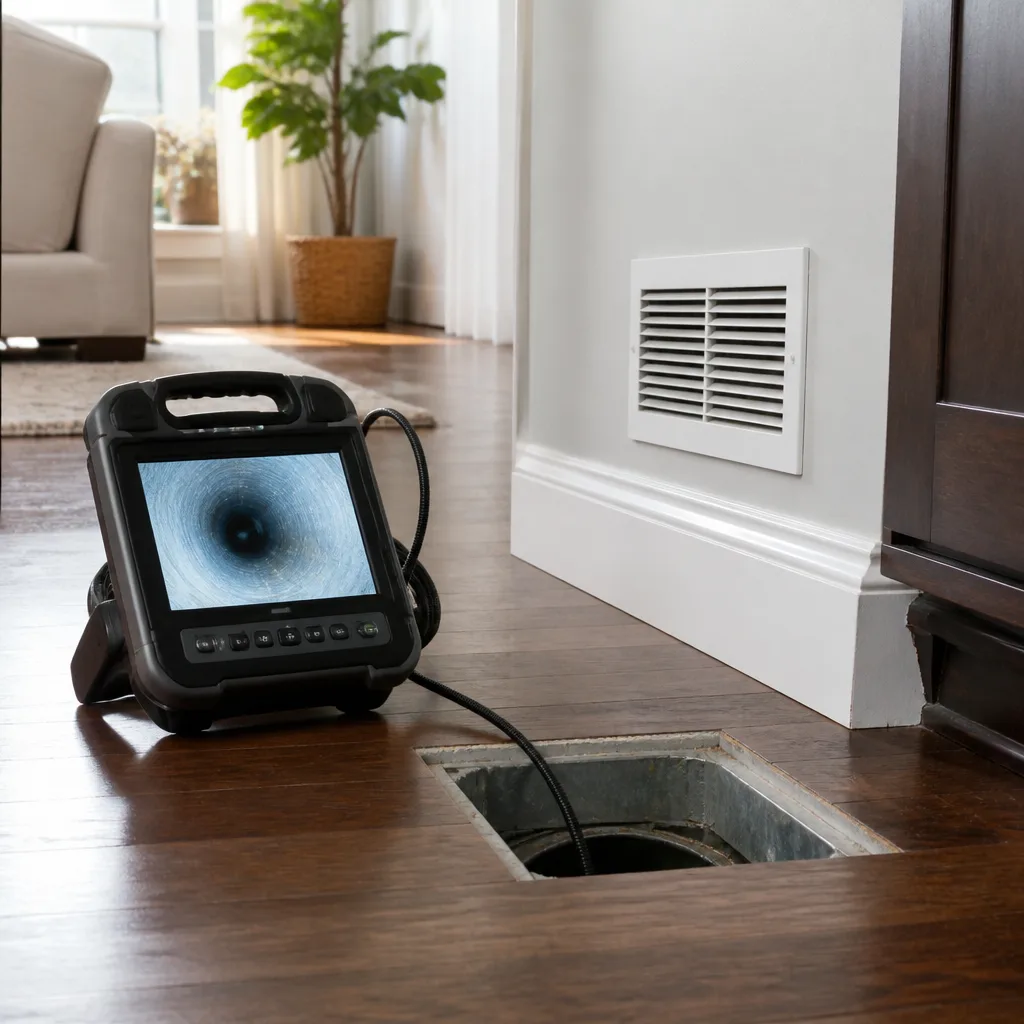 Camera inspection
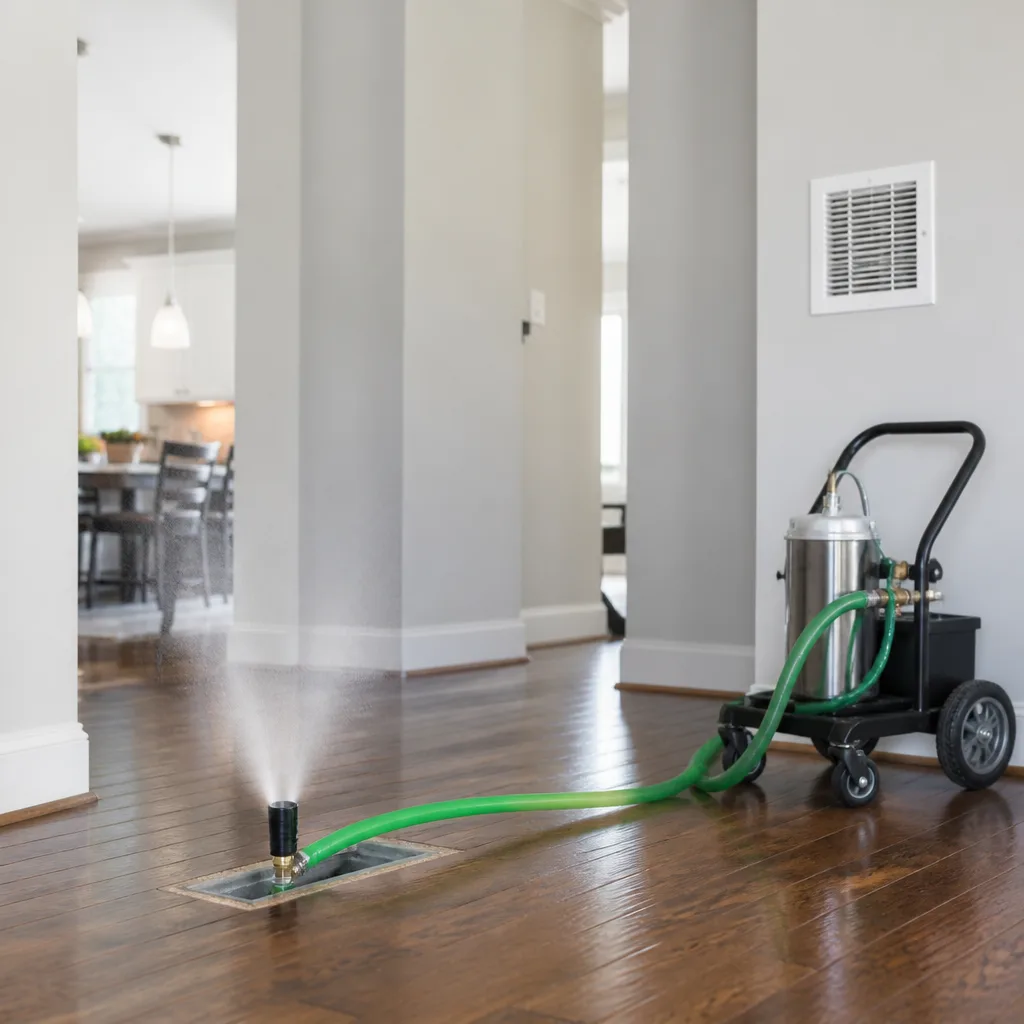 Sanitizing & deodorizing
Whole-system duct and dryer vent check with before-and-after photos - you see exactly what came out of your vents
That "$99 whole-house special" is a bait ad - the real number appears once they are in your hallway, or the "clean" is a shop-vac at the register. We photograph the inside of your ducts before and after instead.
Air Duct Cleaning Cost Breakdown: The Redmond Homeowner’s Reference for 2026
Most Redmond homeowners start shopping for duct cleaning by comparing the bottom-line number. That’s the first mistake. A quote under $200 for a Redmond home with central forced air almost always excludes the air handler cleaning, the return plenum, and any post-service verification, which means the system’s highest-contamination components are left exactly as they were. The number looks low because the work is small. This guide takes the opposite approach: we’ll break a Redmond duct cleaning job into its component parts, show roughly what each part costs to do properly, and give you the vocabulary to read a scope of work instead of just a price. You’ll learn which cost tiers actually change air quality outcomes, which upgrades earn their place, and which ones are padding.
Quick Answer
Air duct cleaning in Redmond typically runs $350 to $750 for a standard single-family home, with full-system jobs that include the air handler, return plenum, and trunk line cleaning landing between $700 and $1,200 or more. The wide spread isn’t profit margin; it reflects whether the quote covers the whole system or just the easy-to-reach supply branches. A written scope of work, a per-register and per-component breakdown, and before-and-after photos are what separate a $400 job from a $99 special that ends in a $1,100 invoice.
Styles & brands we work with
- Whole-home duct cleaning
- Dryer vent cleaning
- Camera inspection
- Sanitizing & deodorizing
Table of Contents
- What a real Redmond duct cleaning job includes
- Why square footage is a weak predictor of cost
- Truck-mounted negative pressure vs. portable equipment
- The add-ons worth paying for, and the ones that aren’t
- How to compare quotes on scope, not price
- Redmond housing stock and how it changes the job
- Common mistakes to avoid
- When to call a professional
What a real Redmond duct cleaning job includes
A legitimate full-system cleaning is not one task. It’s a sequence of tasks, and each one carries its own labor and equipment cost in the Redmond market. When a contractor quotes you a single number, ask them to break it down against something like this list. If they can’t, you’ve learned something useful.
Here’s how we scope a full-system job and roughly what each component contributes to the total:
- Supply branch cleaning (per register): Each supply register gets a brush-and-vacuum pass with a rotary tool, then a negative-pressure vacuum connection at the trunk. Typically the largest single line item, and the one most affected by register count. A Redmond home with 12 to 18 supply registers sits in the middle of the range.
- Return duct and return plenum cleaning: Returns carry the highest debris loading because they pull from the living space. Often omitted from cheap quotes, and often the dirtiest section of the system.
- Trunk line and main duct cleaning: The large rectangular or round mains that distribute air. Requires larger brush heads and a stronger vacuum than a portable unit can sustain.
- Air handler cleaning: The blower compartment, blower wheel, and cabinet interior. This is where dust accumulates and gets redistributed every time the system runs. Skipping it is like vacuuming a room and leaving the rug.
- Register and grille removal and cleaning: Physical removal, washing, and reinstallation of every supply and return grille.
- Before-and-after photo documentation: Photos of the interior of the ducts and air handler taken at the start and end of the job. This is verification, and it costs the contractor time. It’s also the single best proof that the work happened.
- Containment and HEPA filtration: Sealing openings and running HEPA-filtered negative pressure so dislodged debris doesn’t migrate into the living space. Professional setups use equipment built for remediation-level filtration, such as Abatement Technologies units.
Add these up and you get the $700 to $1,200 range for a full-system job in Redmond. A quote of $99 or $149 almost never includes the return plenum or the air handler. Sometimes it doesn’t include the trunk lines either. The homeowner pays for a partial job and gets partial results, then wonders why the air still smells like dust a week later.
Why square footage is a weak predictor of cost
Many contractors price duct cleaning by the square foot of the home. It sounds fair and it’s easy to quote over the phone. It’s also the least accurate way to predict what a job will actually cost to do well. Square footage doesn’t tell you how many registers the system serves, how old the ductwork is, or what it’s made of, and those three factors drive the labor and equipment time far more than floor area does.
Here’s what actually predicts job complexity in Redmond:
- Number of supply and return registers. A 2,400-square-foot home with 20 registers takes longer, uses more brush heads and vacuum connections, and generates more debris than a 3,200-square-foot home with 14 registers. Register count is the honest unit of work.
- System age. Ductwork installed in the 1980s or 1990s often has accumulated decades of debris, loose joints, and tape that has dried out and failed. It takes longer to clean and may need repair before cleaning makes sense.
- Duct material type. Sheet metal cleans predictably. Flexible duct has ridges that trap debris and requires gentler tools to avoid damage. Ductboard has a porous interior liner that can degrade over time; if the liner is compromised, replacement may be the better path than cleaning.
- Access. Ducts run through crawlspaces, attics, and tight mechanical closets. A Redmond home with a low-clearance crawlspace takes longer than one with an open basement mechanical room, and that labor is real.
- Filter and maintenance history. A system run without proper filtration for years carries far more debris than one serviced regularly. Ask when the filter was last changed. The answer tells you a lot about what the ducts look like.
When you know your register count and duct material, you can ignore the square-footage quote and ask a contractor to price per register and per component instead. That’s a scoping conversation, not a negotiation tactic.
Truck-mounted negative pressure vs. portable equipment
The equipment tier is the single biggest driver of whether cleaning actually removes debris or just stirs it up. This is where the cost difference between a $400 job and a $900 job lives, and it’s worth understanding before you compare quotes.
Truck-mounted negative pressure uses a large vacuum unit with a long hose run into the home. It pulls a high volume of air through the duct system, creating sustained negative pressure that keeps debris moving toward the vacuum rather than into the living space. It’s the standard for commercial and restoration work because it holds up over a full-system job with many registers and long trunk lines.
Portable equipment ranges from a shop vacuum with a brush attachment to a proper portable HEPA unit. A shop vac can’t sustain the airflow needed to pull heavy debris through a trunk line, and it doesn’t create real negative pressure. It can knock loose surface dust near the register, and it can aerosolize debris into the room. The homeowner sees a technician with a hose and assumes the work is happening. It may be, or it may not be.
What we use, and why it matters for the cost discussion: professional-grade systems from Rotobrush and Nikro for the agitation side, paired with HEPA-filtered negative pressure equipment from Abatement Technologies built to remediation standards. These tools cost more per job than a shop vac by a wide margin, and that cost shows up in the quote. That’s the trade-off you’re evaluating. Portable equipment is cheaper because it does less.
One practical note when comparing quotes: ask what the contractor uses for negative pressure and whether it’s HEPA-filtered. A clear, specific answer is a good sign. A vague one, or a promise to “use our powerful equipment,” tells you the contractor either doesn’t know or doesn’t want you to know.
The add-ons worth paying for, and the ones that aren’t
Every duct cleaning quote in Redmond comes with a menu of upgrades. Some of them make technical sense for your system. Others are margin generators dressed up as air quality solutions. Here’s how we’d evaluate them on merit.
Worth evaluating on merit:
- Coil cleaning. The evaporator coil is where condensation happens, and a dirty coil can grow microbial buildup and restrict airflow. If the coil hasn’t been cleaned in years, this directly affects system efficiency and air quality. Worth pricing out.
- Duct repair and sealing. Leaky ducts are often the root cause of both contamination and energy loss. Sealing the joints and reconnecting loose runs after cleaning prevents the same problems from returning. This is why we offer it as a standalone service alongside cleaning; cleaning alone doesn’t fix a leaky system.
- Dryer vent cleaning. This isn’t a duct cleaning upsell. It’s a fire-safety service that addresses one of the leading causes of residential fires. Lint accumulation in a dryer vent is a hazard, not a maintenance afterthought. If it’s been a while, it belongs on the list.
- Sanitizing after a documented contamination event. If the ducts show microbial growth on inspection, a targeted sanitizing application using a Guardsman-grade solution makes sense as a follow-up to cleaning, not a substitute for it.
Worth questioning at standard residential scale:
- UV treatment. UV lamps at residential duct scale have limited reach. They don’t clean a duct, they don’t move air, and their effectiveness depends heavily on placement and dwell time. If a contractor pushes UV as a primary solution, ask what it’s replacing.
- Fogging or “air purification” sprays. These apply a product to the air stream, not the duct surface. Without cleaning first, they mask the problem temporarily. On top of proper cleaning, their value depends on what’s actually growing and where.
- Filter upgrades bundled into the quote. A quality filter is worth having, but it’s a filter, not a cleaning. Bundling a premium filter into the cleaning quote as an “air quality upgrade” muddles the scope. Buy the filter separately if you need it.
A useful rule: any add-on that has a specific technical justification for your system, and that a contractor can explain without a script, is worth considering. Anything that comes in a package deal with a single price and no explanation is usually margin.
How to compare quotes on scope, not price
Two quotes of $500 for the same home can mean entirely different amounts of work. The only way to compare them is to compare the written scope line by line. Here’s a process that makes that straightforward.
- Ask every contractor for the scope of work in writing before they quote a price. It should list each component from the list in the first section of this guide: supply branches, return plenum, trunk lines, air handler, register removal, photo documentation, containment.
- Count the registers in the scope against your own count. If your home has 16 registers and the quote lists 8, you know what you’re getting.
- Ask about the equipment, by name if possible. Which vacuum system? Is it HEPA-filtered? Truck-mounted or portable? Does the contractor name their equipment the way we name Rotobrush, Nikro, and Abatement Technologies?
- Ask what happens if the ducts show damage or microbial growth. Does the contractor stop and explain, or do they upsell on the spot? A written process for handling surprises is a sign of a real operation.
- Ask for before-and-after photos of your own ducts, not stock images. This is the single most reliable verification that the work was done. If a contractor hedges on this, move on.
- Compare the bottom line only after you’ve compared the scope. The cheaper quote is often cheaper because it does less. Sometimes that’s the right call; sometimes it isn’t. You can only decide once you see both scopes side by side.
This is the same approach we take when we quote a job in Redmond: one flat price per system, agreed before work starts, with the scope in writing. No per-vent pricing surprises, no mid-job add-ons. The written estimate sets the final price.
Redmond housing stock and how it changes the job
Redmond’s housing mix shapes what a duct cleaning job looks like here. The area has a large share of homes built in the 1970s, 1980s, and 1990s that are now reaching the age where duct systems need attention, alongside a growing number of newer construction homes with tighter envelopes and modern equipment. Both present different cost profiles.
Older Redmond homes, particularly those around the downtown core and the neighborhoods south of Redmond Way, often have original ductwork with failing joint tape, loose connections, and sometimes flex runs that have sagged or been rerouted over the years. Those homes need repair and sealing alongside cleaning, and the scope is larger. Homes built in the 1990s and 2000s tend to have flex duct in the attic or crawlspace, which cleans fine but need gentle tools and may need repair at connections.
Newer construction in the area, including homes in the newer developments east of downtown, often has tighter systems and better filtration, which means less accumulated debris but a higher risk of airflow issues from undersized returns or restrictive filters. In those homes, an inspection and a scope discussion matter more than a heavy cleaning.
The local climate plays a role too. Redmond’s damp winters and long shoulder seasons mean the HVAC system runs in heating mode much of the year, pulling Kaniche debris and dust through the returns continuously. Homes with pets or recent remodeling see more loading, especially in the return plenum. That’s a general pattern, not a claim about any specific home, but it’s worth knowing when you’re deciding how often to schedule service.
For a deeper look at the cleaning process itself, our air duct cleaning page walks through the full sequence. If your system includes an air handler that hasn’t been serviced in years, the HVAC cleaning page covers what that component needs and why it’s often the dirtiest part of the system.
Common Mistakes to Avoid
- Choosing a quote based on the bottom-line number alone. A $149 quote and a $700 quote aren’t the same job with different margins; they’re different jobs. Compare scopes, not prices.
- Assuming the air handler is included. Many quotes silently exclude it. If it’s not listed in the written scope, it’s not in the job, and it’s where the most contamination lives.
- Paying for sanitizing as a first step instead of a follow-up. Sanitizing over dirty ducts doesn’t clean them; it seals debris in place. Cleaning comes first, sanitizing only if inspection shows a reason.
- Letting a contractor skip photo documentation. Before-and-after photos of your own ducts are the only reliable proof the work happened. Stock images don’t count.
- Treating dryer vent cleaning as a convenience add-on. It’s a fire-safety service. Lint accumulation is a hazard, and in Redmond homes with long dryer runs, it’s worth scheduling on its own. Our dryer vent cleaning page explains what’s involved.
- Getting a quote over the phone based on square footage. If a contractor won’t ask about register count, duct material, and equipment before quoting, the number won’t mean much.
- Skipping repair and sealing because cleaning “looks” like the main event. Clean ducts are only half the job. Leaky joints let contaminated air back into the system, and sealing addresses the root cause rather than the symptom.
When to Call a Professional
Some duct issues are a cleaning job. Others are a safety concern or a system failure that needs a trained eye. Call a professional if you notice persistent dust or a musty odor coming from the vents, visible debris around the registers, or a system that seems to be working harder than it used to. Call before any remodeling project that generates heavy dust and debris in the living space, since that material migrates into the returns. Call if you’ve had water intrusion or a pest issue in the ductwork, because those need inspection rather than a simple cleaning. And call if your dryer is taking noticeably longer to dry a load or the vent hasn’t been checked in years; that’s a safety issue, not a convenience one. Redmond Air Duct Cleaning Co offers free estimates in Redmond; call (877) 792-7059 to schedule. We answer 24/7. Fast dispatch from 7am to 7pm, Sunday through Friday.
See the difference
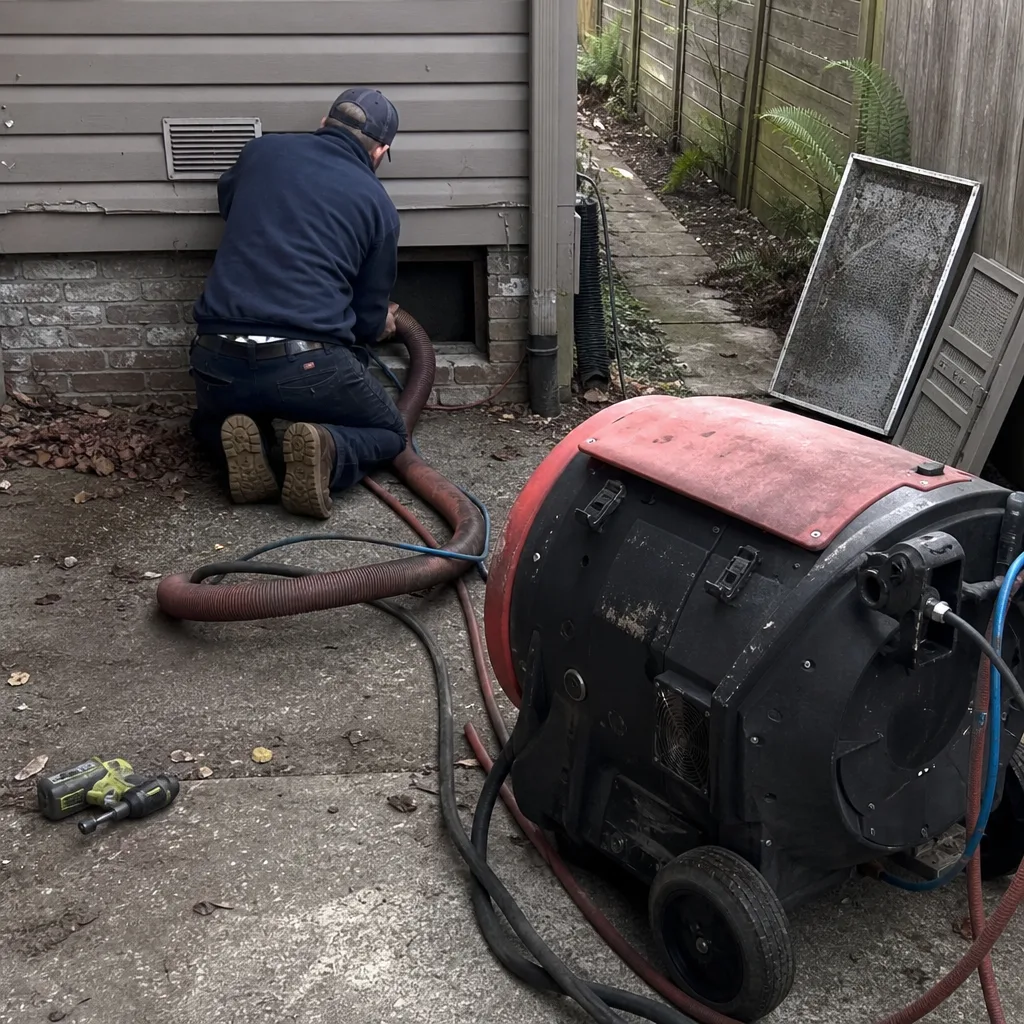 Before
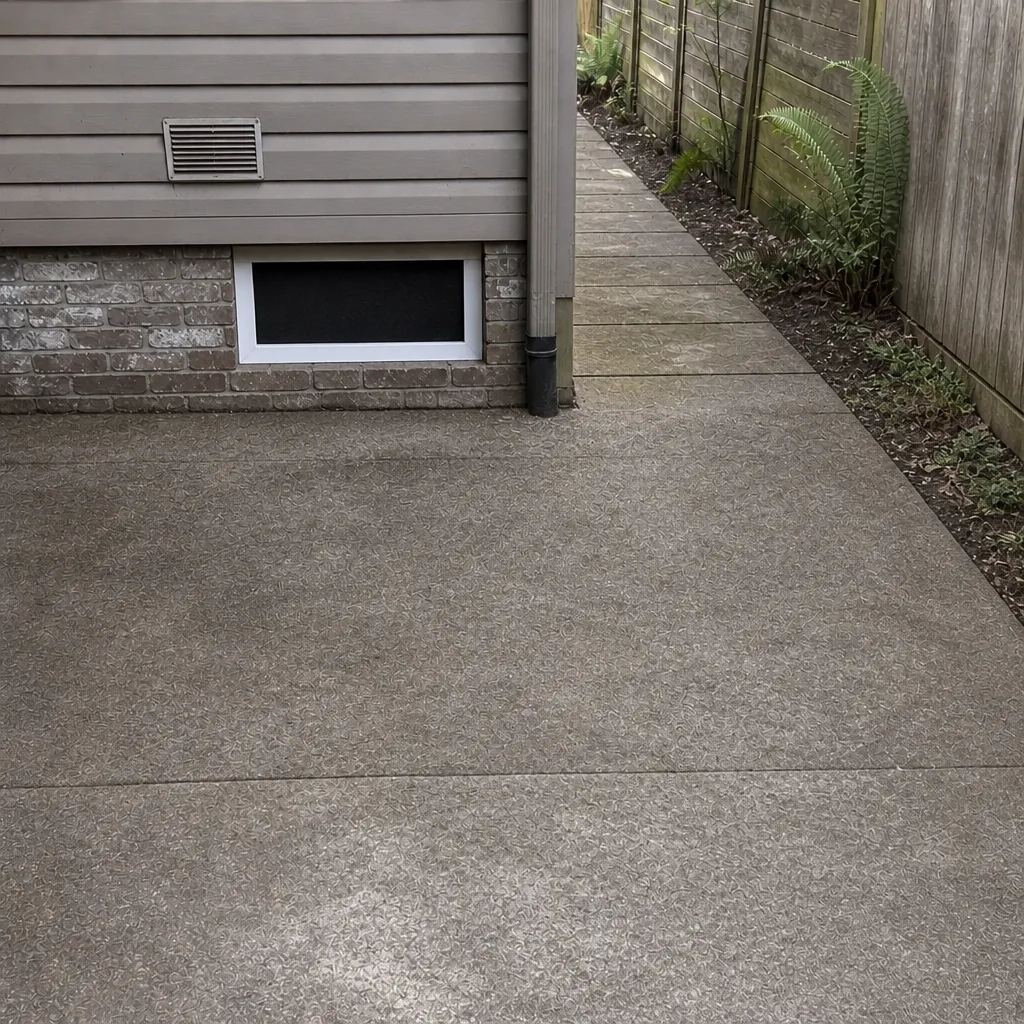 After
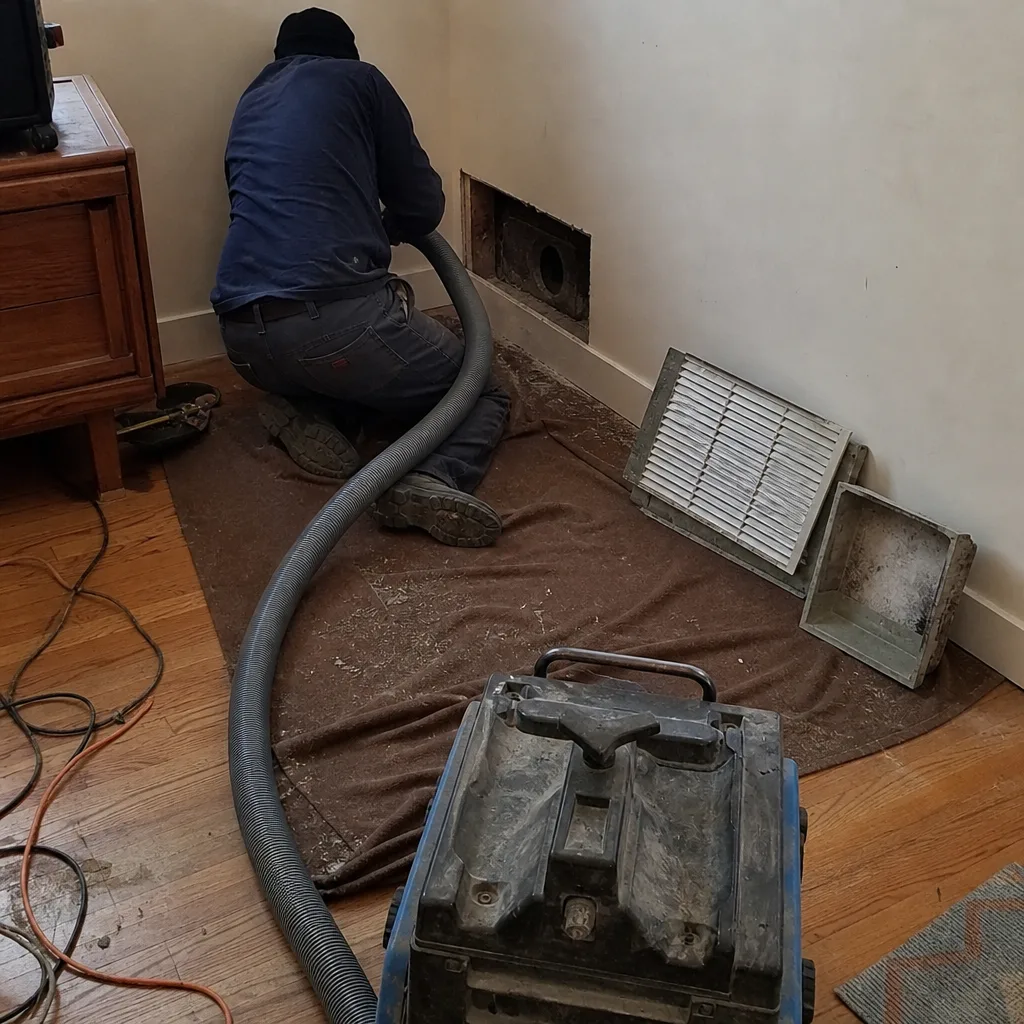 Before
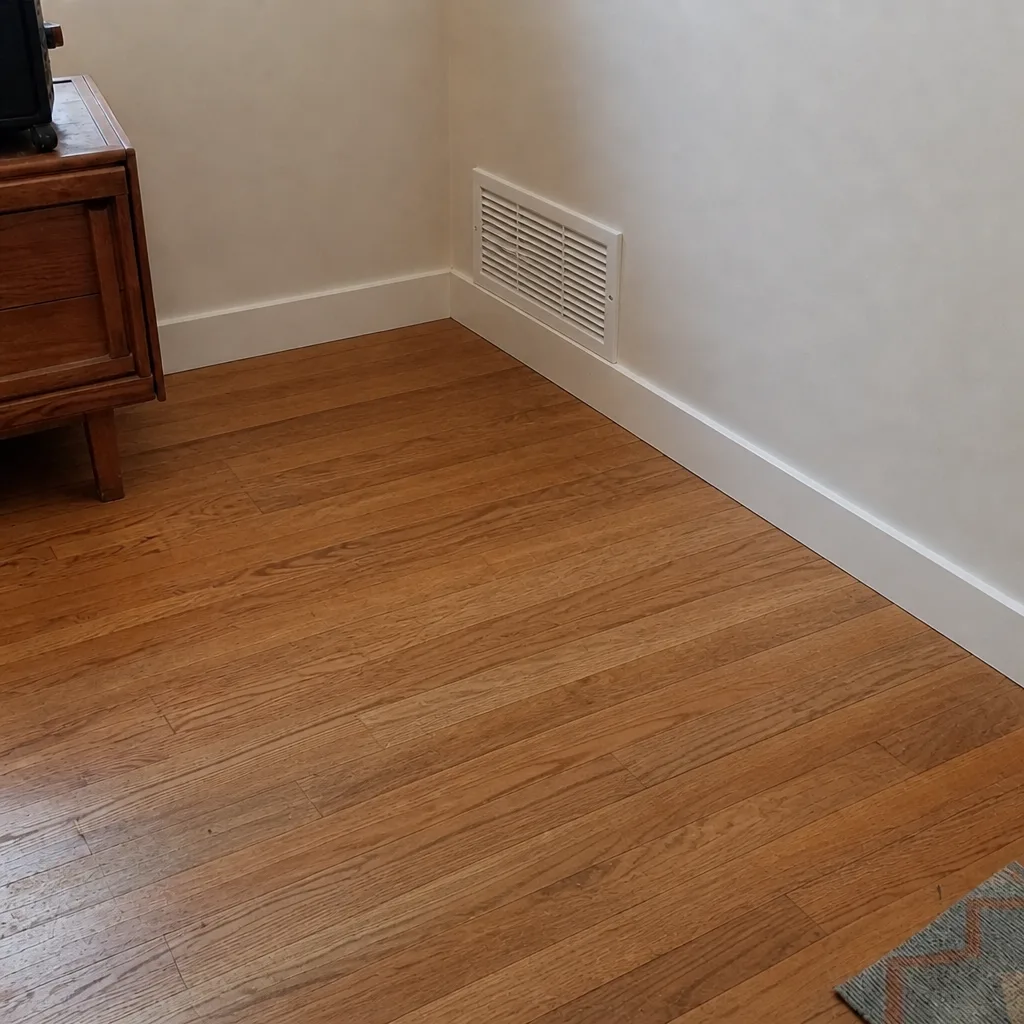 After
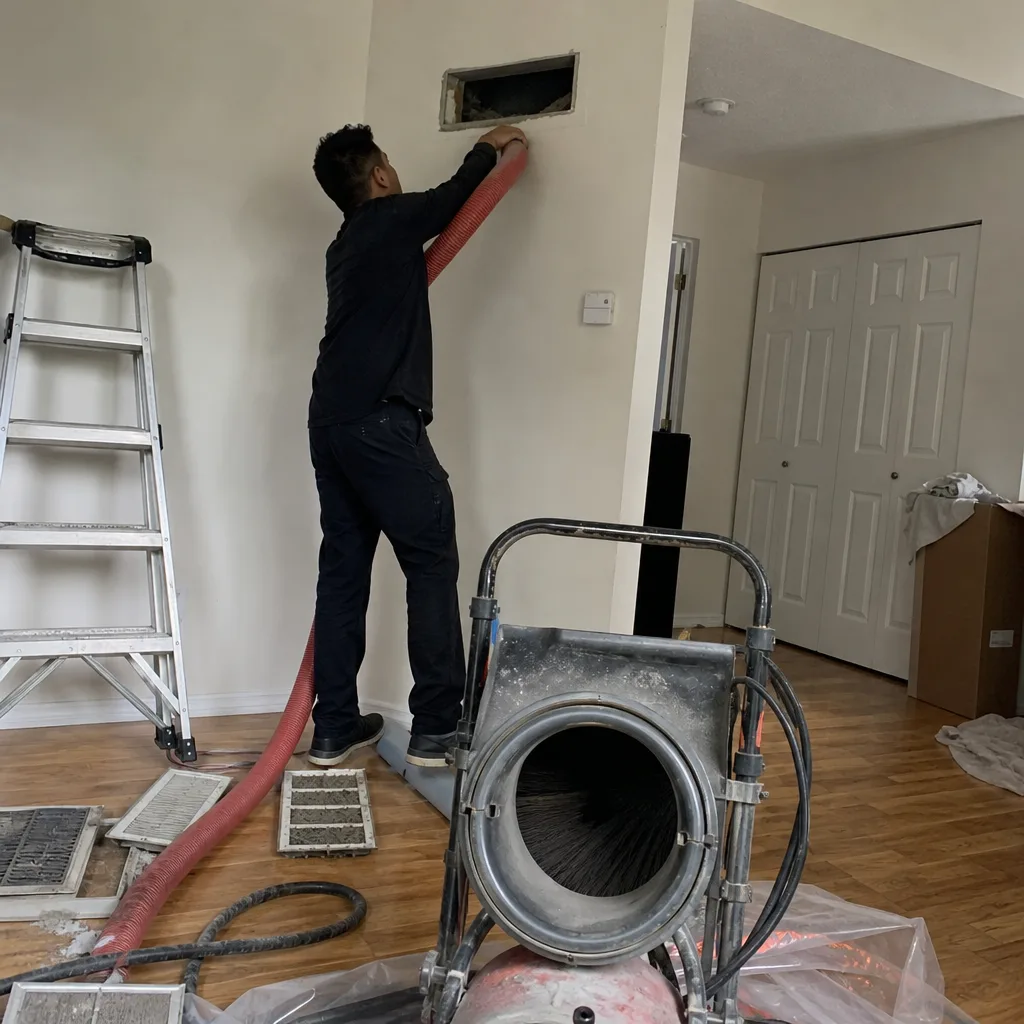 Before
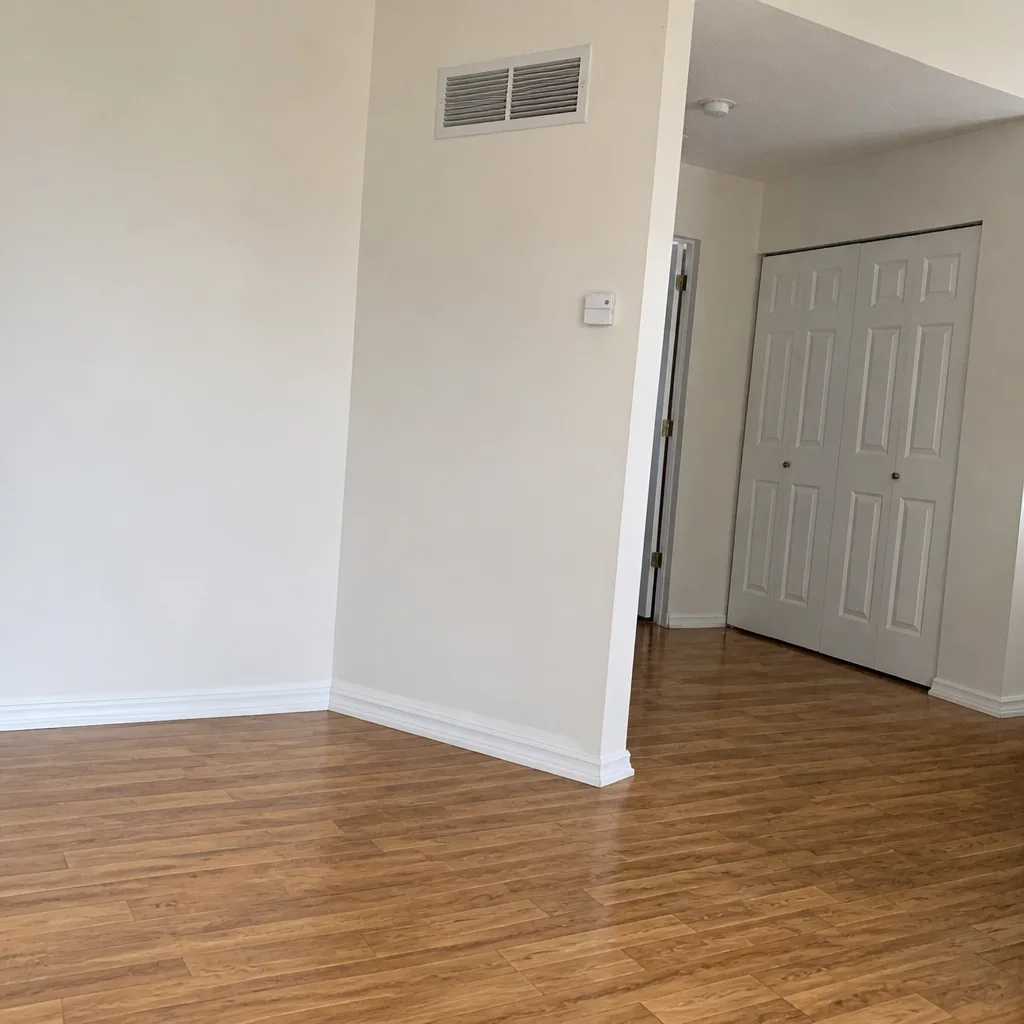 After
Frequently Asked Questions
A standard single-family home in Redmond typically falls in the $350 to $750 range for cleaning that covers the supply branches and returns, and $700 to $1,200 or more for a full-system job that includes the air handler, return plenum, and trunk lines. The written estimate sets the final price. Call (877) 792-7059 for an exact quote; estimates are free.
Cheap quotes are usually partial jobs. A $99 special often skips the air handler and return plenum, those highest-contamination components, and may use portable equipment that can’t sustain the airflow a full-system cleaning needs. The scope, not the profit margin, is what differs. Call (877) 792-7059 and we’ll walk through what a full scope includes for your home.
Before-and-after photos of the interior of your ducts and air handler, taken during your own job, are the most reliable proof. Ask for them up front as part of the scope. If a contractor won’t document the work, that’s a reason to look elsewhere. Call (877) 792-7059 to book a job with photo documentation included.
Most homes do fine with cleaning every three to five years, and homes with pets, allergy concerns, or recent remodeling may need it more often. The right interval depends on your system and what inspection shows, not a fixed schedule. Call (877) 792-7059 and we’ll help you figure out where your system stands.
It improves air quality when it removes accumulated debris from the system that supplies your living space, especially the return plenum and air handler. Cleaning that skips those components won’t change much, since the debris that matters keeps recirculating. A full-system clean with proper containment is what makes the difference. Call (877) 792-7059 to talk through your system.
A full-system clean includes the air handler, return plenum, trunk lines, every supply and return register, register removal and cleaning, and before-and-after photo documentation. A basic clean typically covers the supply branches and little else. Call (877) 792-7059 for a scope breakdown tailored to your home.
The Bottom Line
Duct cleaning pricing in Redmond makes sense once you stop comparing totals and start comparing scopes. The $350 to $750 range covers real cleaning of the supply and return branches. The $700 to $1,200 range covers the whole system, including the air handler and return plenum where contamination concentrates. Equipment tier, register count, system age, and duct material drive the real cost far more than square footage does. Add-ons like coil cleaning, duct sealing, and dryer vent service earn their place on merit; UV treatment and bundled filters deserve hard questions. Get the scope in writing, ask for before-and-after photos, and treat the estimate as a document to read, not a number to beat.
If you’re ready to get a real scope for your Redmond home, we’re happy to put one together. From Redmond Air Duct Cleaning Co, we use professional-grade Rotobrush and Nikro equipment and Abatement Technologies filtration on every job, and we integrate Honeywell and Aprilaire air quality solutions when they fit your system. One flat price per system, agreed before work starts. Call (877) 792-7059 for a free estimate. We answer 24/7. Fast dispatch from 7am to 7pm, Sunday through Friday.
Written by the team at Redmond Air Duct Cleaning Co.