
Last updated November 25, 2026
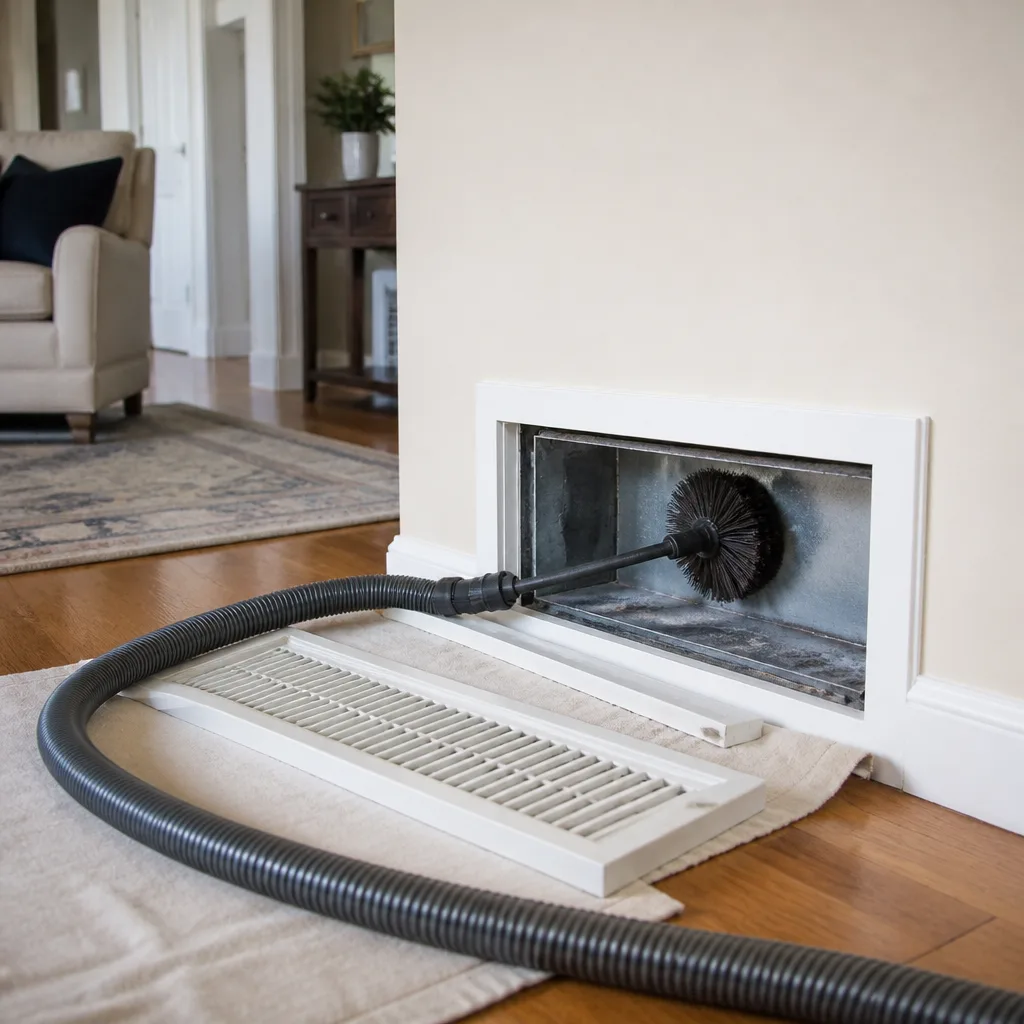 Whole-home duct cleaning
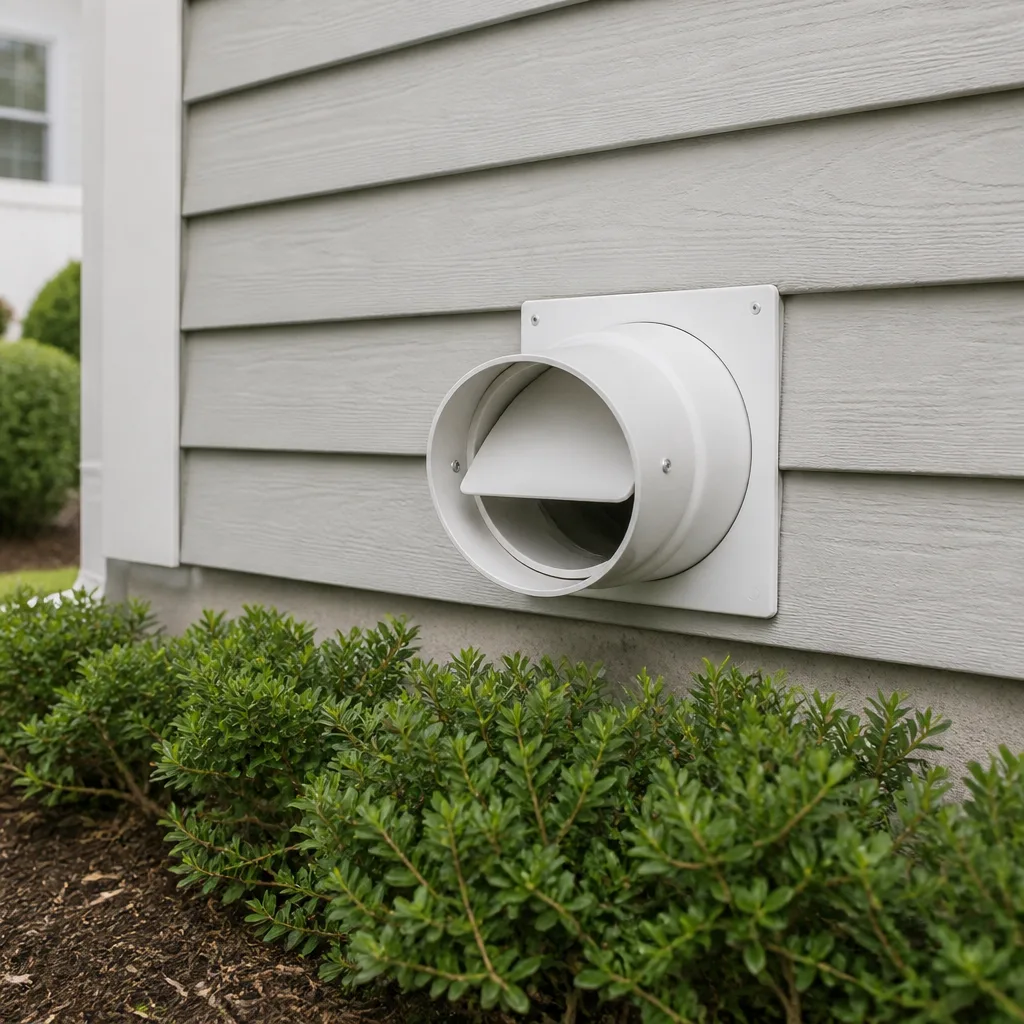 Dryer vent cleaning
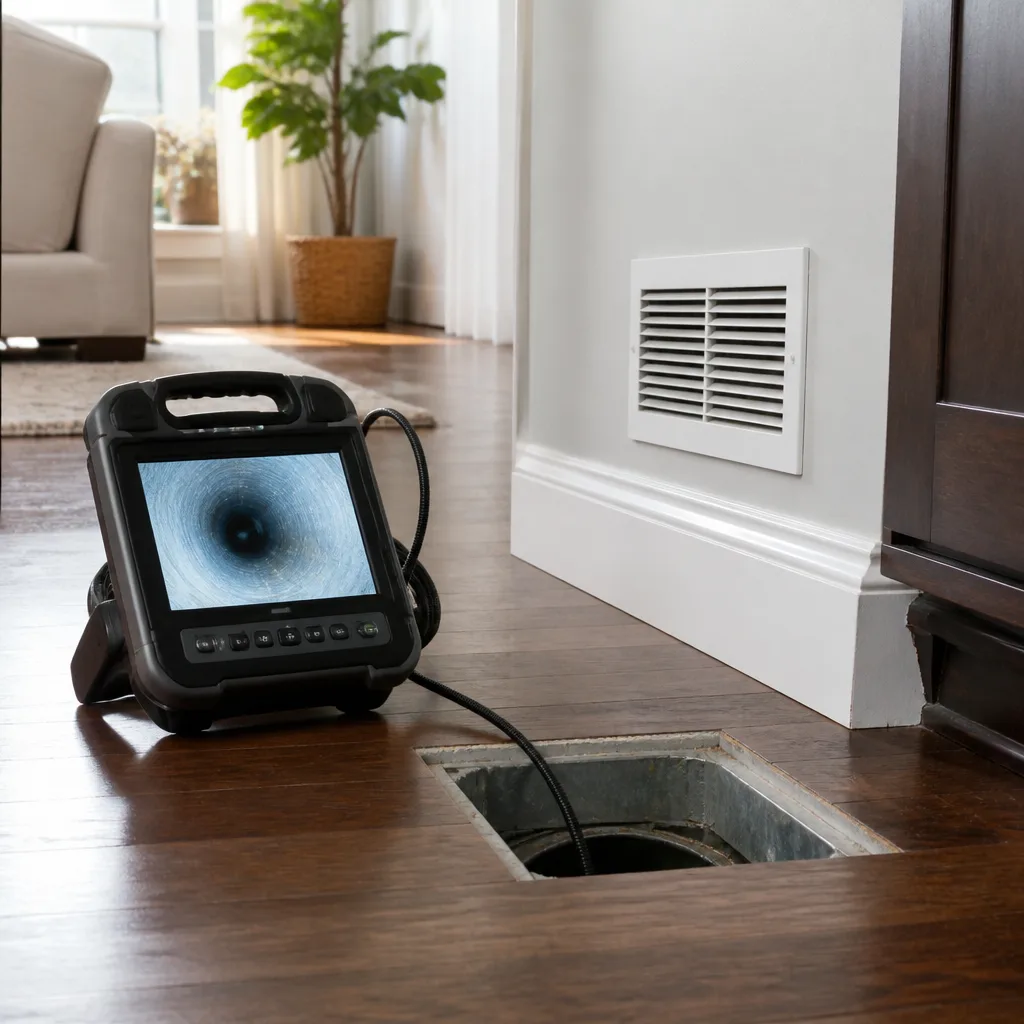 Camera inspection
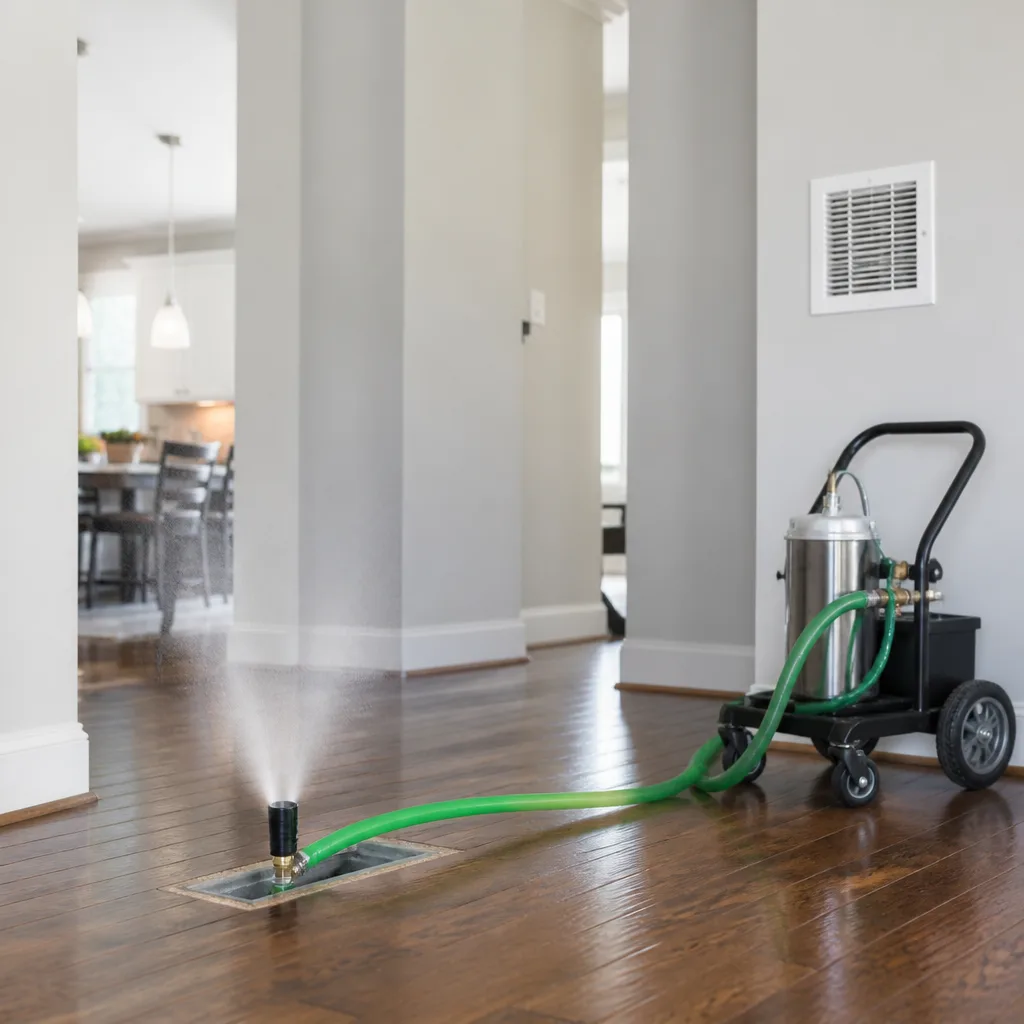 Sanitizing & deodorizing
Whole-system duct and dryer vent check with before-and-after photos - you see exactly what came out of your vents
That "$99 whole-house special" is a bait ad - the real number appears once they are in your hallway, or the "clean" is a shop-vac at the register. We photograph the inside of your ducts before and after instead.
Air Duct Cleaning Permits, Codes & Inspections in Redmond, WA: What You Need to Know
Here’s the part most homeowners miss: cleaning your ducts is maintenance, but changing them is construction. In Washington State, routine air duct cleaning doesn’t require a permit. The moment a contractor cuts a new run, replaces flex duct, seals major sections, or treats mold inside your ductwork, the job can cross into regulated mechanical work that the City of Redmond requires a permit for. That boundary is rarely explained, and it matters at resale, at inspection, and when an insurance claim touches your HVAC system. This guide maps where cleaning ends and permitted work begins in Redmond.
Quick Answer
In Redmond, WA, routine air duct cleaning does not require a permit because it’s classified as maintenance, not alteration. A City of Redmond mechanical permit is required when ductwork is added, removed, relocated, substantially modified, or when components like flex duct runs are replaced under the International Mechanical Code the city enforces. Mold remediation inside ductwork can trigger additional requirements under Washington’s worker-safety regulations (WAC 296-62) and demand specific contractor credentials, so always verify before authorizing work beyond cleaning.
Styles & brands we work with
- Whole-home duct cleaning
- Dryer vent cleaning
- Camera inspection
- Sanitizing & deodorizing
Table of Contents
- Where Cleaning Ends and Permitted Work Begins
- How Redmond’s Building Department Handles Duct Permits
- How to Verify a Contractor Pulled the Permit
- Mold Remediation in Ducts and WAC 296-62
- How Unpermitted Duct Work Affects Insurance Claims
- Questions to Ask Before Authorizing Work
- What a Duct Inspection Actually Covers
- Common Mistakes to Avoid
Where Cleaning Ends and Permitted Work Begins
A cleaner who vacuums, brushes, and agitates debris inside ducts is doing maintenance. A contractor who reroutes a trunk line, adds a supply register to a finished room, or replaces a crushed flex run is doing mechanical alteration. The distinction isn’t marketing language; it’s the dividing line that determines whether a permit is on file with the city.
Here’s how to think about it in practical terms:
- Maintenance (no permit): Source removal of dust, debris, and loose contamination through mechanical agitation and negative-pressure vacuum. This is what a standard air duct cleaning visit covers.
- Repair without modification (typically no permit): Re-sealing joints, taping gaps, and reconnecting a disconnected joint back the way it was originally run. Generally maintenance territory.
- Alteration (permit required): Adding, removing, or relocating ducts, replacing a section of flex duct with rigid, changing trunk or branch sizing, adding a register, or installing new HVAC equipment connected to the duct system.
- Remediation (may trigger additional rules): Treating established mold growth inside the duct system can move the job into a category beyond standard cleaning and repair.
The reason this matters in Redmond specifically: neighborhoods like Education Hill, Grass Lawn, and Overlake have a wide mix of housing stock, from mid-century ranches with flex systems that have been modified more than once, to newer construction in Redmond Ridge and adjacent areas of Sammamish where systems are still on the original design. Older homes with history tend to have the most add-on modifications, and that’s where unpermitted work usually hides. A routine HVAC cleaning can surface those past modifications, but cleaning itself doesn’t correct or legitimize them.
How Redmond’s Building Department Handles Duct Permits
The City of Redmond regulates mechanical work through its building department under the International Mechanical Code (IMC), which Washington adopts statewide with local amendments. A mechanical permit is generally required when ductwork is installed, altered, or replaced. Routine cleaning is not a permitted activity because no mechanical component is being altered.
If you’re authorizing duct repair or sealing and the scope includes any of the following, ask the contractor to confirm whether a permit is required and who will pull it:
- Adding a new supply or return run to a room that doesn’t currently have one.
- Relocating a duct that interferes with a remodel, ceiling change, or new appliance.
- Replacing a section of flex duct with rigid duct, or upsizing/undersizing a run.
- Connecting a new HVAC unit to the existing duct system.
- Converting system type, such as adding a heat pump to a ducted air handler where the duct layout changes.
What “pulling a permit” actually means: the licensed contractor submits a mechanical permit application to the City of Redmond, pays the fee, performs the work to code, and the city inspects it. The permit becomes a permanent record at city hall and shows up in a records search when a buyer, inspector, or insurer looks. Small repair work that restores a duct to its original configuration usually doesn’t need a permit, but the boundary between “repair” and “alteration” is where disputes happen. When in doubt, ask the building department directly before work starts; a brief call now prevents an expensive problem at sale.
How to Verify a Contractor Pulled the Permit
Verification is straightforward and doesn’t require special knowledge. If a mechanical permit is required for the work you’re authorizing, the contractor should be able to give you the permit number before they start, and you should be able to look it up through the City of Redmond’s permit portal. If they can’t produce a number, the permit isn’t pulled.
- Ask for the permit number in writing on the estimate, before work starts.
- Look up the permit on the City of Redmond permit search to confirm the scope matches what you’re authorizing.
- Confirm the inspection result after the work is done. A passed inspection is the paper trail you want.
- Keep a copy of the permit and inspection record with your home files. You’ll want it when you sell.
Two related credentials to confirm before any work, even cleaning:
- Contractor registration with the Washington State Department of Labor & Industries (L&I). You can look this up on L&I’s contractor verification page. Registered contractors must also carry a bond and insurance as required by the state.
- Scope of licensing. Washington has specific license classifications (for example, a general contractor versus a specialty HVAC contractor versus an abatement contractor). Ask any crew cleaning ducts to confirm their scope covers the work you’re requesting, especially if mold remediation is on the table.
We’re not a licensing authority, and we won’t pad a page with credential claims we can’t verify. What we can tell you is that the local professionals we connect Redmond homeowners with are licensed and insured as the state requires, and we ask you to verify that on L&I for yourself. A contractor who’s used to the question will answer it without hesitation.
Mold Remediation in Ducts and WAC 296-62
Here’s where the regulatory picture gets more serious than most homeowners expect. Once mold inside ductwork is established rather than trace, treatment stops being a cleaning service and becomes abatement, and Washington regulates that work carefully under WAC 296-62, the state’s general occupational health rules for hazardous exposure. The rules exist for good reason: mold remediation involves disturbing contaminated material, and the person doing the disturbance needs training and protection.
What to understand before you authorize mold treatment in your ducts:
- Abatement is a licensed category in Washington. Remediation contractors doing general abatement work fall under L&I’s abatement contractor rules, and the crews need specific training and certification. That’s a different license from an HVAC or cleaning contractor’s.
- Personal protective equipment and containment matter. A crew treating mold inside a duct system should be using proper respiratory protection, containment controls, and negative-pressure equipment so contamination doesn’t spill into the home. Professional-grade systems like Abatement Technologies units are built for exactly this environment.
- Not all “sanitizing” is remediation. Applying a sanitizer to a surface that’s already been cleaned is one thing. Removing established mold growth and treating the source is another. If a contractor can’t tell you which of those they’re doing, ask again.
In practice, mold in residential ductwork usually points to a moisture problem: a humid crawlspace under an Overlake or Bridle Trails home, a leaky coil pan, or condensation on uninsulated flex duct during warm humid stretches in late summer. Whether that problem meets the threshold for abatement is a judgment call, and getting a second opinion on the mold finding before authorizing treatment is reasonable. If a contractor jumps straight to “you need remediation” without explaining what they saw and where, ask for the source. Sometimes the right next step is a moisture fix, not a chemical treatment.
Our own Redmond Air Duct Cleaning Co team works in the cleaning and air-quality side of this picture, using professional-grade Rotobrush and Nikro systems along with Honeywell and Aprilaire solutions. When a job crosses into abatement territory, we say so plainly rather than stretching our scope.
How Unpermitted Duct Work Affects Insurance Claims
If you’ve never filed a homeowners claim tied to your HVAC system, this section is worth reading carefully. Standard Washington homeowners policies don’t usually exclude unpermitted work outright. What they do is intensify scrutiny during a claim. An adjuster investigating a water-damage claim from an overflowing condensate pan, or a fire claim near a duct chase, will ask what work was done, when, and by whom. If the answer includes a duct modification with no permit on file, the claim can be delayed, contested, or partially denied if the insurer argues the unpermitted work contributed to the loss.
Three specific scenarios where this bites:
- A duct modification reduces airflow to a section of the system, causing a coil to freeze and eventually leak. The insurer may ask what changed, and an unpermitted reroute is a documentable “what changed.”
- Mold develops after a remodel that included new ductwork without a permit. The insurer may question whether the moisture issue is “sudden and accidental” or a chronic problem tied to construction.
- A fire starts near a dryer vent or duct chase. If the duct work or dryer vent installation isn’t documented, the causal picture is harder to defend.
The fairest way to look at this is preventive: a permit does two things. It gets the work inspected to code, and it puts a public record that the work was done correctly. Both help at claim time. If you’re buying a Redmond home, ask the seller for permits on any duct or HVAC work in the last several years. Missing permits are negotiable, but only when you find them before closing.
Questions to Ask Before Authorizing Work
These questions cut straight through the noise. Ask them before you sign, and don’t accept “we’ll take care of it” as an answer to any of them.
- “Is this maintenance, repair, or an alteration?” If they can’t answer cleanly, the scope isn’t defined yet.
- “Does this work require a City of Redmond permit, and will you pull it?” A clear yes or no; if yes, get the number in writing.
- “What is your L&I registration number and license classification?” Verify it independently.
- “If mold is found, is that within your scope, or do you subcontract abatement?” Abatement is a separate credential in Washington, and the answer should be specific.
- “What equipment will be on site?” Professional cleaning uses mechanical agitation and negative-pressure HEPA vacuum sources, not shop vacs. Names like Rotobrush, Nikro, and Abatement Technologies mean something in this trade.
- “Will you photograph before-and-after and share the images with me?” Cleaning should have a visual outcome you can verify. See the difference in your own ducts, not a stock photo.
- “Is the price per system or per vent, and what’s not included in the quote?” One flat price per system, agreed before work starts, is the standard for a legitimate operation.
- “Do you offer duct repair and sealing, or just cleaning?” Clean ducts are only half the job. Loose joints and disconnected runs will re-contaminate a clean system within a season. A company offering dryer vent cleaning as part of its menu usually thinks in system terms rather than one-off cleans.
If any of these questions feels like a trap for the contractor on the other end of the phone, that’s a warning sign. A professional answers them in two sentences each and moves on.
What a Duct Inspection Actually Covers
The word “inspection” gets used loosely in this trade, so clarity helps. Three different things called “inspection” can come up around your ducts, and they are not the same event.
- Contractor visual inspection: A technician traces the duct system, opens registers and plenum panels, uses a camera in tight spots, and reports condition: debris load, disconnected joints, crushed runs, moisture, and visible mold. Usually free or included with an estimate.
- Municipal inspection: The City of Redmond verifies permitted mechanical work to code after a contractor completes it. This is scheduled by the contractor, not the homeowner, and follows a permit.
- Real-estate or pre-sale inspection: A home inspector notes the visible condition of the ductwork and HVAC system during the broader home inspection. They flag concerns but don’t issue mechanical permits.
A standard pre-cleaning visual walk-through takes about twenty to forty minutes for a typical Redmond home. What a good one looks like:
- Photographs of the plenum and the return side before any cleaning begins.
- Disconnected or crushed flex sections identified with a note about whether they’re repairable in place or require replacement.
- Moisture check on any duct in a crawlspace or attic, especially after the wet fall and winter months Redmond sees.
- Dryer vent inspected if included, with the vent routing traced to confirm it terminates outside.
- Written findings shared before the cleaning quote is finalized, so you know what you’re paying for.
The duct layout on a Redmond home built in the 1970s vs. one built recently in a newer development can produce very different findings, and a walk-through that skips the camera or the plenum is worth re-scheduling. If a company quotes a price on the phone without seeing the system, they’re guessing.
Common Mistakes to Avoid
- Assuming cleaning needs a permit. Routine cleaning doesn’t; a homeowner who calls the city asking about a permit for cleaning will get confused signals, and a contractor who over-promises permits for cleaning work is equally confused. Ask specifically what scope needs the permit.
- Approving an add-on scope mid-visit without re-checking the permit question. This is the classic trap: the quote starts as cleaning, then a “while we’re in there” duct replacement gets added, and the required permit never gets pulled. If the scope changes, the permit question changes with it.
- Taking a verbal “we’re licensed for that” on abatement. Mold remediation in ducts requires a specific Washington credential separate from general HVAC licensing. Ask for it, and verify with L&I independently.
- Ignoring an over-vented or crushed flex run because the cleaning quote was cheap. A duct the technician can see is crushed and disconnected will refill with debris quickly. Fixing the run is part of the job, not an upsell.
- Skipping the pre-sale documentation check. Redmond buyers and their agents increasingly ask for permit history on any ductwork or HVAC modifications. Missing permits can slow or kill a sale.
- Relying on a cordless shop vacuum. Professional cleaning uses negative-pressure HEPA vacuum sources and rotary agitation tools sized for a full residential system. If the crew shows up with consumer gear, the results won’t match the promise.
- Cutting corners on the dryer vent. The dryer vent is a separate, smaller duct system with a real fire-safety role in every home. It’s not a maintenance afterthought, and it deserves its own cleaning, not a quick swipe with a brush.
See the difference
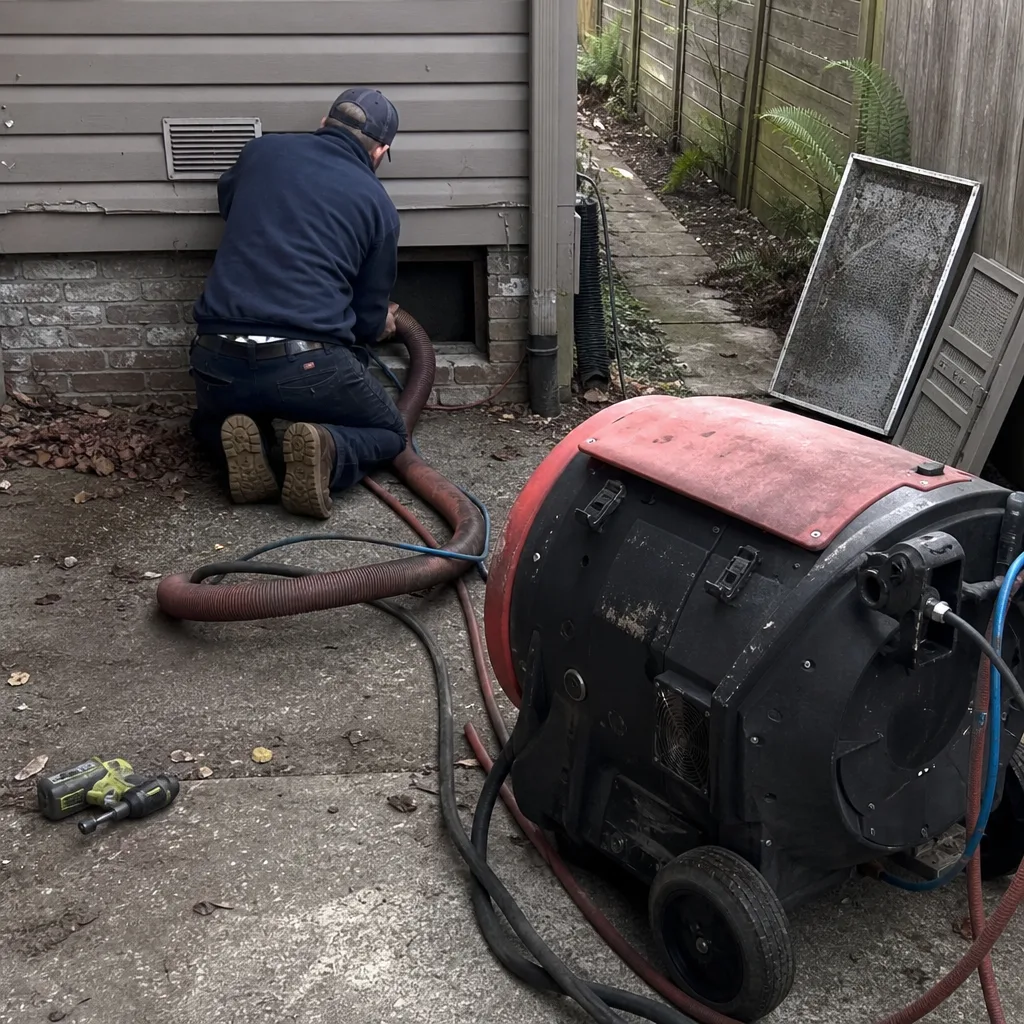 Before
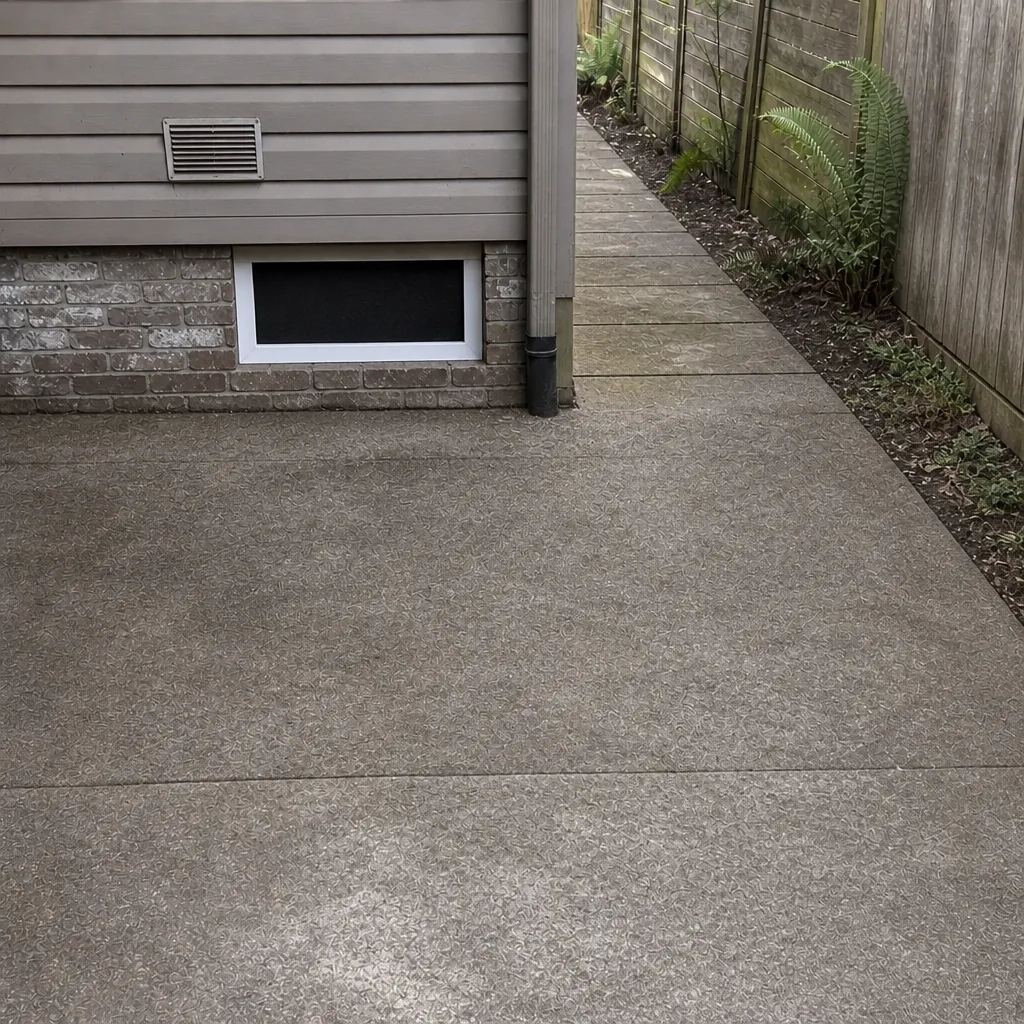 After
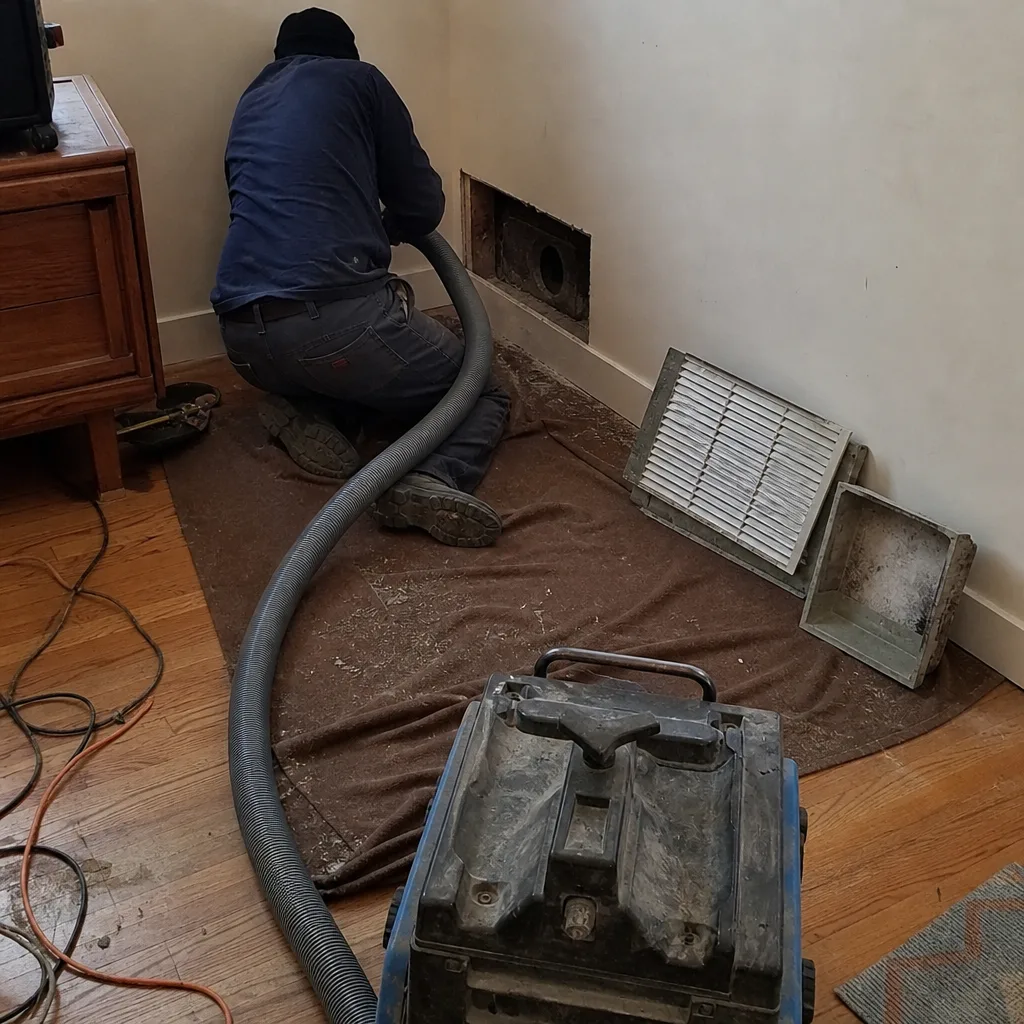 Before
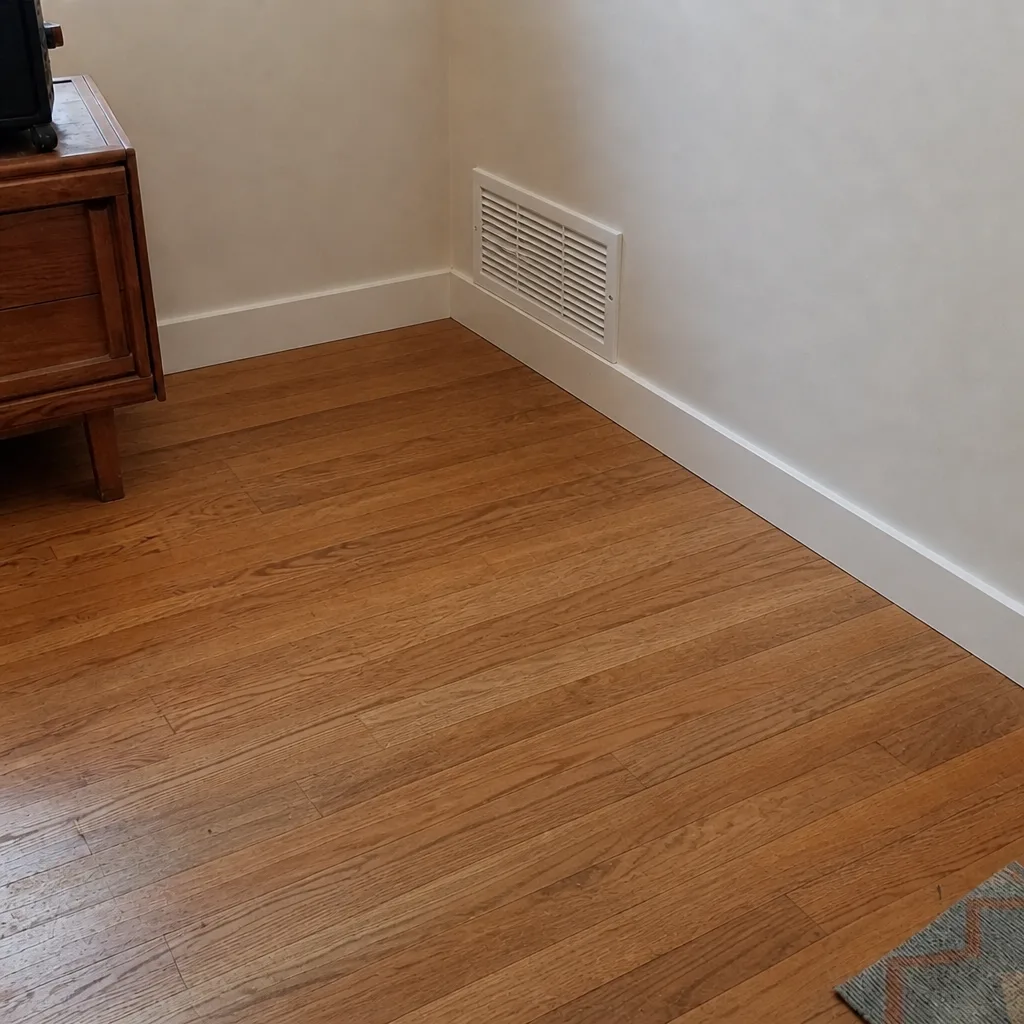 After
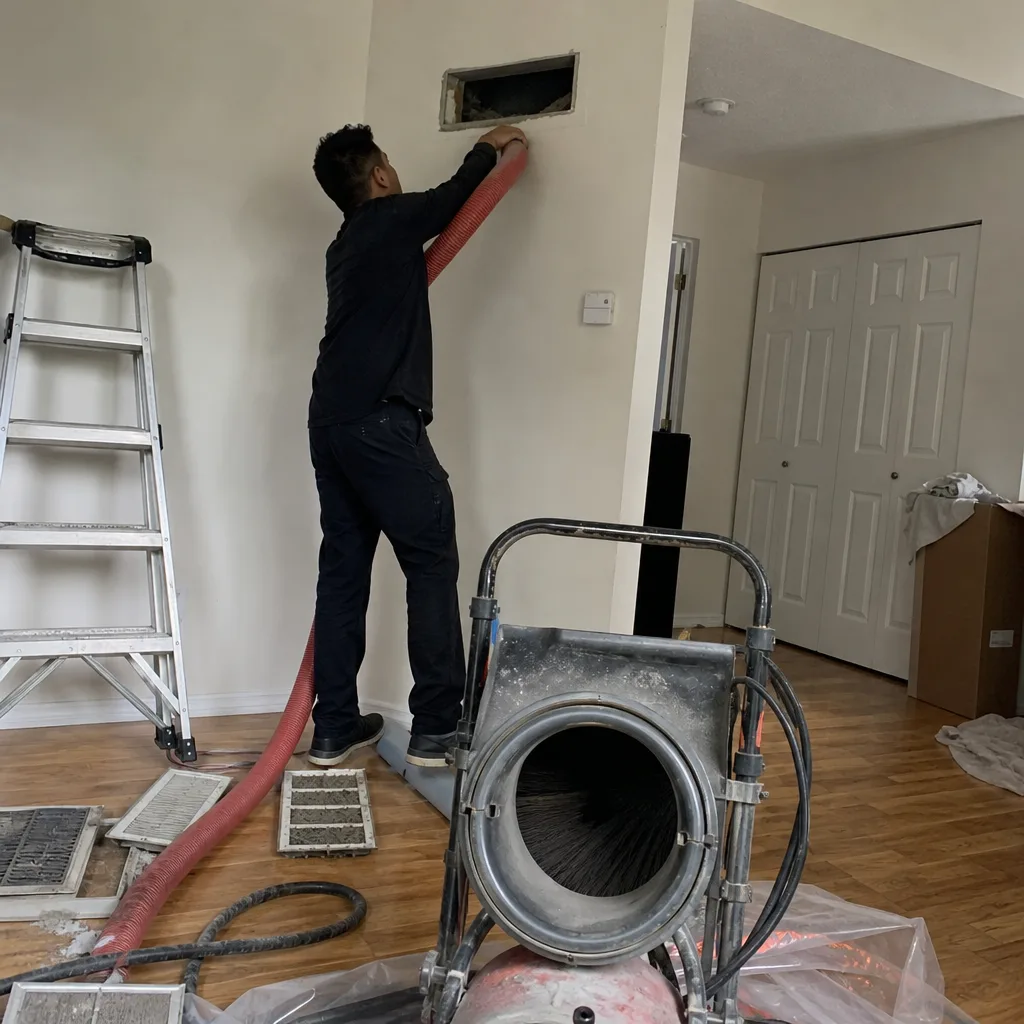 Before
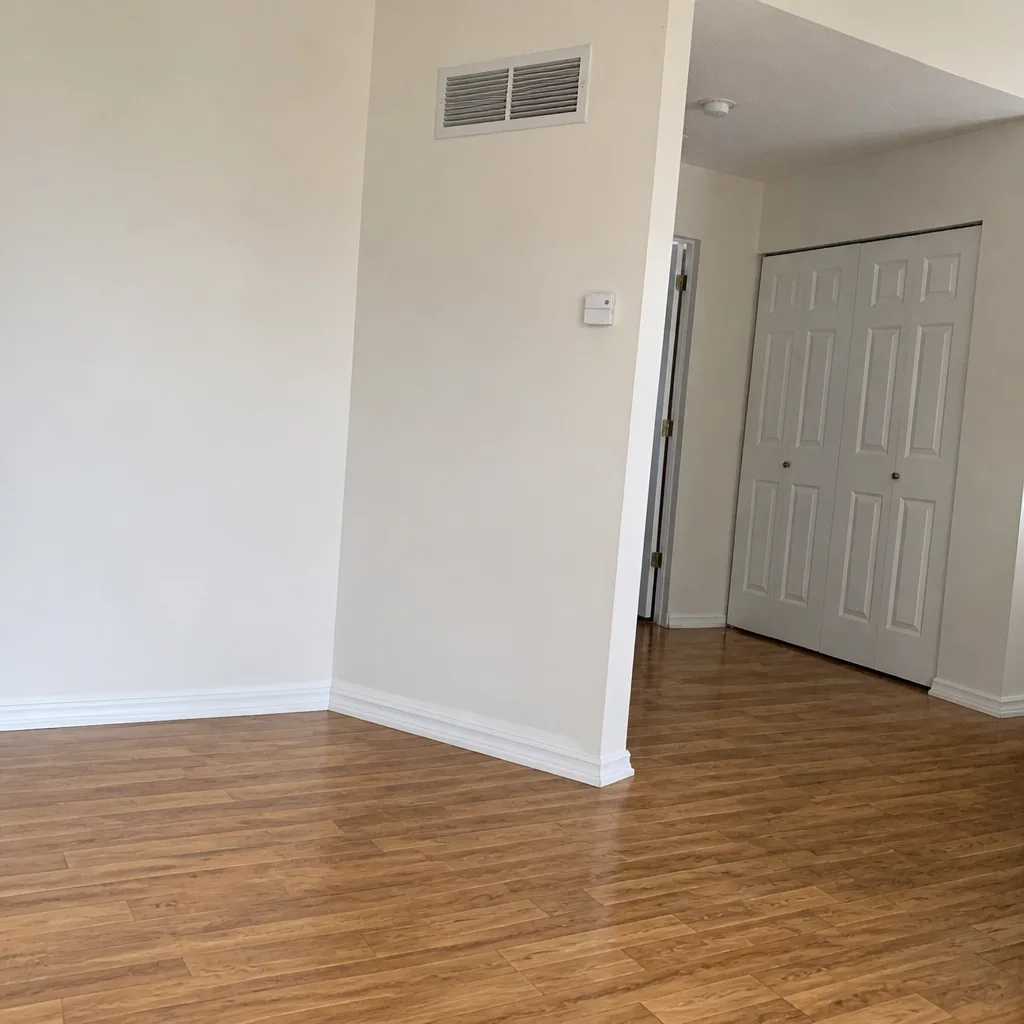 After
When to Call a Professional
Some situations call for a pro on the phone the same week. If you can see visible debris blowing out of supply registers, smell a musty or smoky odor that doesn’t clear when the system runs, hear a rattle or whistle from the duct chase, notice a crushed or disconnected flex run in the attic or crawlspace, or find visible mold on any duct surface, get professional eyes on the system. Same goes for a dryer taking two cycles to dry a load, which usually means a restricted vent. Redmond Air Duct Cleaning Co offers free estimates in Redmond. Call (877) 792-7059. We answer 24/7. Fast dispatch from 7am to 7pm, Sunday through Friday.
Frequently Asked Questions
No. Routine air duct cleaning is maintenance and does not require a permit from the City of Redmond. If the scope of work expands into duct alteration, replacement, or mold remediation, a permit or a different license may be required, and the contractor should tell you so before starting.
When the work counts as an alteration under the International Mechanical Code the city enforces: adding, removing, or relocating a duct run, replacing flex duct with rigid, or changing a duct’s size. Simple re-sealing and reconnecting a joint back to its original configuration usually doesn’t require a permit. When in doubt, ask the Redmond building department directly, and ask the contractor to confirm in writing.
No. Mold remediation inside a duct system is abatement work in Washington, and abatement is a licensed category under WAC 296-62 with specific training and credential requirements. A cleaning company that finds established mold should either hold that credential or point you to a contractor who does. Ask for the credential and verify it with L&I.
Redmond pricing is estimated per system, not per vent, and the written estimate sets the final price. Whole-system cleaning is quoted after a walk-through because a single-story ranch in Grass Lawn and a two-system home in Education Hill don’t take the same work. Call (877) 792-7059 for an exact quote. Estimates are free.
Ask for before-and-after photos of your own ducts, taken during the visit and shared with you. A legitimate operation photographs the plenum, a representative supply run, and the return side before and after cleaning. If the crew can’t produce photos, ask why before paying. Call (877) 792-7059 to book a walk-through and see what the process looks like.
It can, especially if a claim involves the HVAC system or water damage near the duct chase. An insurer investigating a loss may ask what work was done to the system and whether it was permitted. Unpermitted modifications can complicate or partially deny a claim if the insurer argues the unpermitted work contributed to the loss. Keeping permit records with your home files protects you on both resale and claims.
Often because the scope is smaller, the equipment is consumer-grade, or the price is a teaser figure that grows once the technician is on site. Ask what’s included, what equipment will be on site, and whether the price is per vent or per system. One flat price per system, agreed before work starts, is the honest comparison point. Call (877) 792-7059 for a quote you can hold next to the others.
Most homes do well with cleaning every few years, and homes with pets, recent remodeling dust, or a prior smoke event may want it sooner. A Redmond home with a humid crawlspace deserves a moisture and mold check at each visit regardless of the cleaning interval. Call (877) 792-7059 to talk through your specific system.
The Bottom Line
Cleaning your ducts is maintenance and doesn’t need a permit. Duct alteration, replacement, and mold remediation are another matter, and the City of Redmond and Washington State both regulate that work. Verify contractor licensing through L&I, ask about permits whenever scope goes beyond cleaning, get before-and-after photos of your own system, and keep permit records with your home files. That combination protects you at resale, at claim time, and every time the system runs. For a Redmond walk-through and a written estimate, call (877) 792-7059. We answer 24/7. Fast dispatch from 7am to 7pm, Sunday through Friday.
Written by the team at Redmond Air Duct Cleaning Co.