
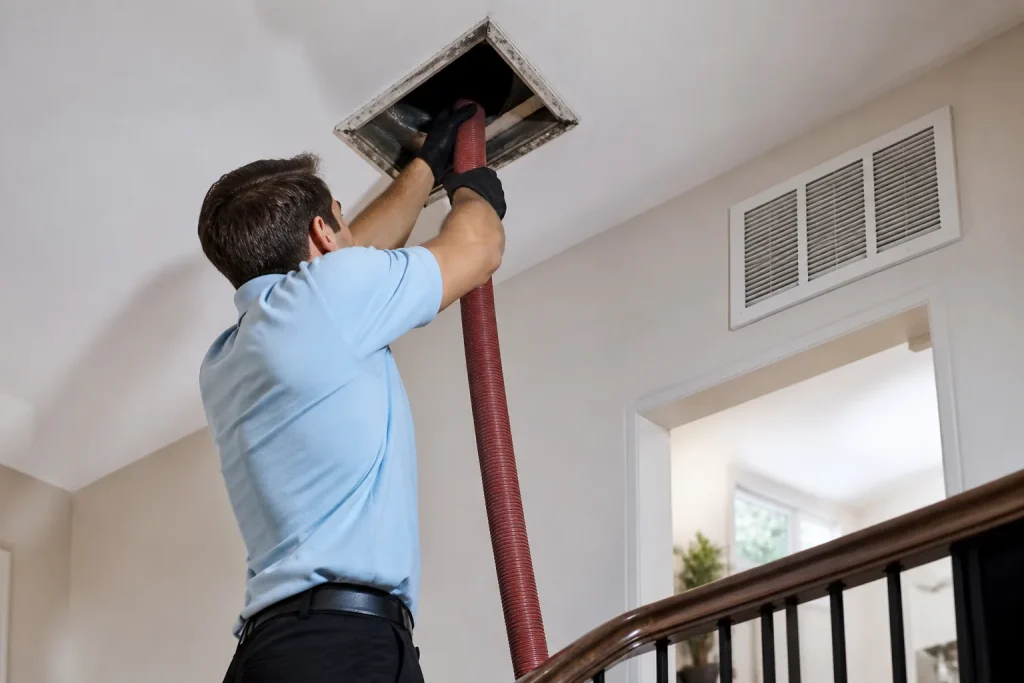
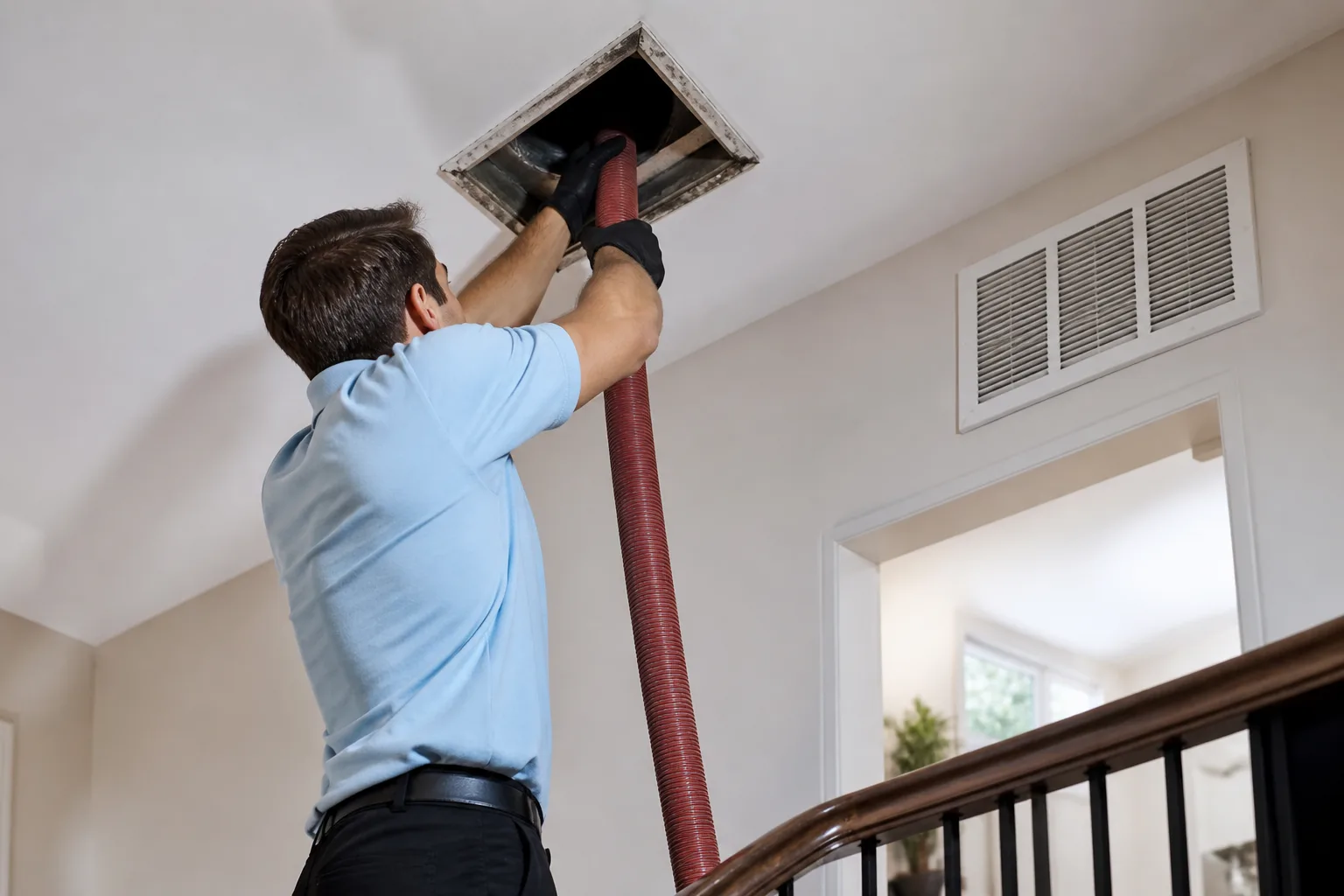
Air Duct Cleaning: Repair or Replace? How Redmond Homeowners Decide
Cleaning a duct system with a 6-inch breach in the crawlspace isn’t maintenance. It’s theater. You’ll pay for a truck, a technician, and a few hours of negative pressure, and the dust will find that breach again within a heating season. The cleaning question and the structural integrity question have to be answered in the right order, and in Redmond they often aren’t. Homeowners ask us whether to clean or replace, when the real answer for most of them is: repair and seal first, then clean the system you’ve actually saved.
Why Redmond’s Climate Makes Duct Condition the First Question
Redmond sits in a wet, mild-winter climate, which sounds forgiving for ductwork but isn’t. The combination of damp soil under crawlspaces, seasonal groundwater movement, and old construction that predates modern vapor barriers creates the exact conditions that turn a small duct problem into a contamination problem. Ducts in unconditioned crawlspaces here see cool, humid air on the outside and warm conditioned air on the inside for months at a stretch. That temperature differential is what drives condensation on the exterior of metal duct runs. Condensation is what rusts seams, weakens tape, and softens fiberboard.
The practical result for Redmond homes: you rarely find a duct system that’s aged out purely by years in service. You find one that’s been slowly compromised by moisture, pest intrusion, or poor original installation, and the years are almost incidental.
That’s why the first visit should be an inspection, not a cleaning. Our technicians have up to 11 years of experience, and what they find in a Redmond crawlspace usually falls into one of these buckets:
- Surface contamination only. Dust, debris, light biological growth in the ducts themselves, ductwork structurally sound. Cleaning is the right call.
- Isolated breach or disconnected joint. One or two sections pulled apart at a fitting, or a crushed flex run in a tight crawlspace. Repair and seal, then clean.
- Widespread damage. Multiple failed seams, saturated fiberboard, or duct runs that can’t be effectively cleaned without falling apart. Section replacement is usually the sounder path.
- System-level failure. Undersized or badly routed original design, plus damage. Replacement is the only investment that pays back.
The order matters. Clean a system with an open breach and you’ve just moved the contamination around while telling the homeowner the job is done. That’s not a clean, and it’s not a repair. It’s a bill.
How Duct Material Type Changes the Calculus
The repair-or-replace decision hinges on what your ducts are made of. Redmond has a mix of all three common materials, and each behaves differently.
Flexible duct (flex)
Common in retrofits and additions. Flex is cheap, quick to install, and the most vulnerable. The inner liner tears, the outer jacket separates, and the corrugation traps debris that’s genuinely hard to remove. A crushed or torn flex run is almost never worth repairing. It’s replaced section by section. If half your system is flex with visible damage, replacement starts to beat cleaning on pure economics.
Fiberboard duct
Common in older homes here. Fiberboard is a porous duct material, which means it absorbs moisture and biological growth rather than just collecting dust on the surface. Once fiberboard is saturated or showing microbial growth within the board itself, cleaning it is like cleaning a sponge. You can knock the surface debris loose, but you can’t restore the material. Sections that are compromised get cut out and replaced with sheet metal or new fiberboard, depending on the run.
Sheet metal duct
The most serviceable material. Sheet metal can be cleaned, resealed, re-insulated, and spot-repaired for years beyond what the other materials allow. This is where cleaning-and-repair is genuinely the better call versus full replacement. Professional-grade Rotobrush and Nikro systems are built for exactly this kind of work, with the reach and agitation to clean a metal trunk line properly and the HEPA filtration to keep the debris contained.
When Cleaning Is the Right Call (and When It’s Not)
Cleaning makes sense when the contamination source has been resolved and the duct geometry allows a real clean. That’s the honest two-part test. If either fails, cleaning is a short-term fix on a system that will keep re-contaminating.
Cleaning is viable when:
- The duct system is sealed and continuous, with no open joints, tears, or disconnected runs
- Contamination is surface-level debris, dust, and normal accumulation
- Duct material is intact and structurally sound
- The HVAC air handler itself has been cleaned and the filter system is working
- There’s no active moisture intrusion feeding the system
Cleaning a compromised system is a temporary fix when:
- There’s a known breach pulling crawlspace air into the ducts
- Fiberboard is saturated or showing growth inside the board
- Flex runs are crushed, torn, or disconnected
- Pest activity has left debris and access points
- The system has failed seams where the ducts meet the air handler or trunk
A crawlspace breach in particular is the one we see most in Redmond. The cleaning question and the structural integrity question genuinely run in that order: seal the system first, then decide what cleaning can accomplish.
When the inspection points to contamination beyond what standard cleaning addresses, we bring in Abatement Technologies equipment, which is built for environments where air filtration has to meet remediation standards. That’s the difference between a surface clean and a genuine restoration of the duct system’s air quality.
The Cost Comparison Framework: Partial Replacement vs. Full Cleaning
Here’s where the decision gets practical. The instinct for many Redmond homeowners is to clean because cleaning is cheaper upfront. That math breaks down when the system has multiple issues.
Think about it as two paths:
- Clean the whole system as-is. Lower cost upfront. Restores air quality only if the system is sealed and sound. If it’s not, the same contamination returns, and you’ll clean again within a season or two.
- Repair and seal damaged sections, then clean. Higher total cost upfront. Restores air quality and stops the source of contamination. Usually the smarter long-term spend on a system that has one or two isolatable problems.
Partial section replacement lands in between, and it’s often the most cost-effective option that competitors skip. Replace the failed sections (crushed flex, saturated fiberboard), seal the rest, then clean the whole system. You’re not chasing replacement of a healthy trunk line just to avoid a few compromised runs.
Our air duct cleaning work is paired with sealing and repair for exactly this reason. Cleaning a compromised system without addressing the failure is the bill-today, problem-next-season path.
A written estimate should lay out the findings, the recommended sequence, and per-section decisions in writing, before any work starts. If a company quotes only on cleaning and doesn’t mention repair, ask what they found in the inspection and how they verified the system was sound.
Why the Cleaning Company Isn’t the Right Source for the Replace Decision
This is the part most homeowners don’t think about. The company you hire to clean your ducts has a financial interest in cleaning being the answer. That doesn’t make them dishonest, but it does mean you should ask for the inspection findings in writing and treat the replace recommendation with some scrutiny.
A genuinely unbiased assessment has three components:
- Written findings with photos. Before-and-after shots of your actual ducts, not stock images. Photos of the specific breaches, saturated sections, or failed runs that are driving the recommendation.
- A scope that separates cleaning from repair and replacement. If a company only sells cleaning, they can’t advise you honestly on replacement. That’s why a full-system specialist has a real advantage here: our service menu covers air duct cleaning, dryer vent cleaning, HVAC cleaning, duct repair and sealing, and air quality and sanitizing. We can tell a Redmond homeowner “your system needs section replacement, not cleaning” without losing the job.
- Pricing that isn’t per-vent. Per-vent pricing incentivizes selling more vents, not cleaning the system properly. Whole-system pricing with a written scope is the honest structure.
If you want a second opinion on a replace recommendation, that’s reasonable. Ask for the specific photos behind the call, and ask whether partial replacement plus sealing would solve the problem more economically than full replacement.
When to Call a Pro
Some duct inspection and light cleaning around the registers is reasonable for any homeowner to do. Everything below the filter plate, and everything inside the duct system itself, is a different story. High-static air systems, sealed ductwork, and crawlspace runs are genuinely risky to disassemble without the right equipment and experience.
Call us when:
- You can see dust plumes or debris coming from any register
- You smell musty or moldy air when the system runs
- Your crawlspace has visible moisture issues or pest activity near the ductwork
- A previous cleaning company recommended replacement and you want a second look
- You’re dealing with repeated air quality complaints in the home
Our technicians bring professional-grade equipment including Rotobrush and Nikro systems, plus Abatement Technologies filtration on jobs where contamination needs a higher standard. We also work with Honeywell and Aprilaire air quality components when long-term filtration upgrades make sense for the system, so the cleaning result actually holds.
Related services in Redmond: dryer vent cleaning, HVAC cleaning, and duct repair and sealing are all part of the same system. Clean ducts are only half the job.
The Bottom Line
Repair-or-replace for duct systems in Redmond isn’t about the age of the ducts. It’s about two things: whether the contamination source has been addressed, and whether the duct geometry can actually be cleaned given its current condition. If your system is sealed and sound, cleaning is the right call. If it has one or two isolatable failures, repair and seal those sections, then clean. If the damage is widespread or the material itself is compromised, section or full replacement makes more sense than cleaning a system that will keep re-contaminating.
Get the inspection in writing, ask for photos of your own ducts, and be suspicious of any quote that prices per vent or that only sells cleaning. A full-system specialist with repair and sealing in the same service menu can give you an honest answer, because they don’t have to protect a single-service business model.
If you’re in Redmond and need help deciding, Redmond Air Duct Cleaning Co offers free estimates. Call (877) 792-7059. We answer 24/7. Fast dispatch from 7am to 7pm, Sunday through Friday.
Frequently Asked Questions
Start with a written inspection that identifies breaches, saturated sections, and failed material type. If the system has one or two isolatable problems, repair and seal those sections, then clean. If the damage is widespread or the duct material itself has absorbed moisture (as fiberboard does), replacement of the affected sections usually costs less over time than repeated cleaning of a compromised system.
Yes, significantly. Sheet metal can be cleaned and resealed almost indefinitely. Flexible duct is cheap to replace section by section and rarely worth repairing once the liner is torn. Fiberboard is the tricky one: it’s porous, so once it absorbs moisture or supports growth inside the material, cleaning can’t fully restore it. In Redmond, fiberboard sections that show saturation usually get cut out and replaced.
You can, but the cleaning won’t hold. A system with an open breach or failed seam will pull the same crawlspace air, dust, and moisture back in within a heating season. Cleaning a compromised system is a short-term fix on a long-term problem. Repair and seal first, then clean what you’ve saved.
Because a full-system specialist has repair, sealing, and replacement in the same service menu, so they can recommend replacement without losing the job. If your cleaning company only offers cleaning, ask for the inspection findings and photos in writing and get a second opinion before committing to a replacement quote. Call (877) 792-7059 for a free estimate if you want a second look.
Written by the team at Redmond Air Duct Cleaning Co.
Need Air Duct Cleaning Help?
Call Redmond Air Duct Cleaning Co - the local pro we connect you with is licensed and insured, here with fast help in Redmond.
(877) 792-7059